news

Main Causes and Solutions of Color Difference on LED Displays

7 views admin 2026-07-16

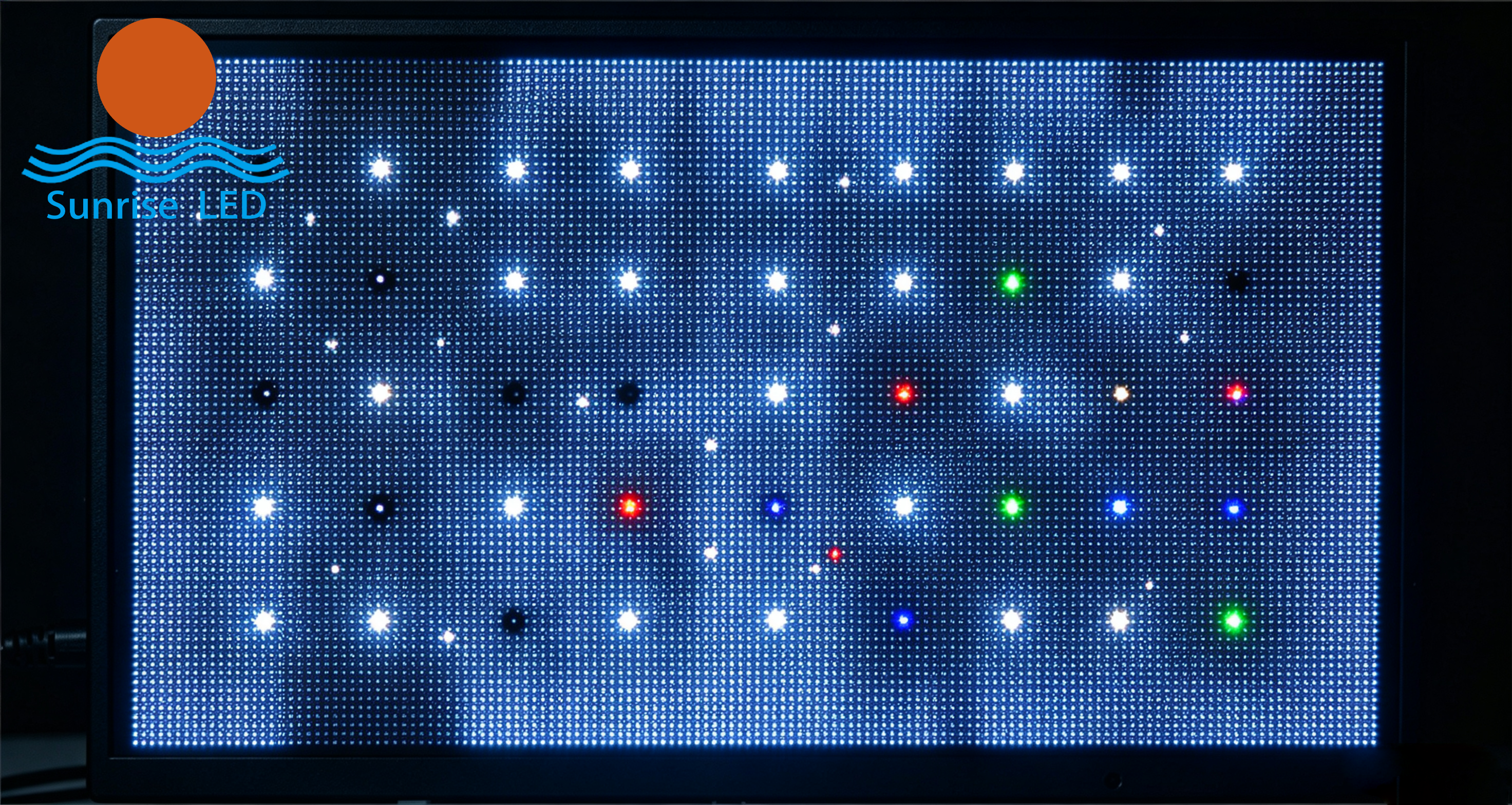
  • Color difference is one of the most common image quality defects of LED displays. It manifests as partial color cast across the whole screen, uneven color between modules, and color deviation under high/low brightness. This issue not only ruins visual experience but also severely downgrades the display presentation effect. Color difference stems from multiple factors instead of a single fault, mainly including inconsistent LED chip hardware parameters, driving circuit deviations, structural installation errors, and color drift caused by long-term aging.
  • 1. Parameter Differences of LED Batches (Inherent Hardware Color Difference)
  • LED chips are the core light-emitting components. Normal sorting tolerance exists during chip manufacturing. LEDs from different batches or different bin grades carry subtle deviations in wavelength, brightness and color temperature. If modules of various batches are mixed during assembly, obvious block-shaped color difference will occur.
  • In addition, red, green and blue LEDs have different light decay rates, with red LEDs fading relatively faster. After long-term operation, the whole screen will turn cyan and dim, resulting in aging-induced color difference.
  • Solutions
  • Strictly unify LED batches and bin grades during procurement and installation; prohibit mixed assembly of modules with different bin levels. Complete overall white balance calibration before new screen delivery. For aged screens, perform secondary point-by-point correction to compensate for inconsistent light decay of RGB chips and eliminate overall color cast.
  • 2. Circuit & Power Supply Deviations (Dynamic Electrical Color Difference)
  • The constant current precision of driving IC directly determines luminous consistency of pixels. Low-quality or aged driving ICs generate excessive current deviation among channels, leading to inconsistent brightness and color output of different pixels under the same picture.
  • Moreover, long-distance power supply for large screens causes voltage drop along cables. Modules at far ends receive lower voltage and thus emit dimmer light, creating regional darkening and color shift. Power ripple interference and poor cable contact also trigger dynamic color deviation and uneven local color flickering.
  • Solutions
  • Adopt driving ICs with high constant current precision, and regularly test output consistency of IC channels.
  • Apply segmented power supply design for large screens to reduce cable voltage drop.
  • Replace aging cables and faulty power supplies, and conduct circuit filtering to eliminate color deviation caused by power interference.
  • 3. Installation Structure & Optical Deviations (Physical Splicing Color Difference)
  • Substandard cabinet splicing accuracy, uneven flatness of modules and inconsistent splicing gaps create optical refraction differences, resulting in visible light/dark color lines along seams.
  • Misaligned mask installation, accumulated dust, yellowing and abrasion oxidation also alter light output performance of pixels, causing inconsistent light transmittance and reflectivity that trigger visual color difference.
  • Solutions
  • Calibrate cabinet horizontal level and splicing gaps during installation, and keep the height difference between modules within standard tolerance.
  • Clean display masks regularly, and replace yellowed, worn or damaged masks to guarantee uniform optical light output across the entire screen.
  • 4. Improper Environment & Calibration Parameters (Manually Induced Color Difference)
  • Ambient light, temperature and humidity fluctuations cause color temperature drift of LEDs. High temperature and humidity accelerate minor oxidation of module circuits and further induce color shift.
  • Besides, irregular white balance and gamma parameter settings, as well as inconsistent parameters for partial areas, are common human-induced color difference issues.
  • Solutions
  • Unify full-screen color parameters on site, and standardize gamma value and white balance settings. Equip the display with moisture-proof and temperature control protection to avoid color drift triggered by environmental factors.
  • Summary
  • Color difference of LED displays falls into four categories: inherent hardware color difference, dynamic circuit color difference, physical optical splicing color difference, and calibration/environmental color difference. Through strict control of material batches, standardized installation & debugging, and regular calibration & maintenance, color difference can be largely avoided or repaired, ensuring long-term uniform and stable image quality of the LED screen.
 

Technology | analysis of naked eye 3D display technology

At present, the naked eye 3D large screen market is hot, and 3D technology is also known as 3D di...
Do you like ?3,033 views

Read more

Sunrise’s p2.604 curved LED display lights up under the Eiffel Tower

Sunrise’s p2.604 curved LED display lights up under the Eiffel Tower     Sunri...

Do you like ?1,973 views

Read more

Sunrise LED Rocky Rental Series led display for concert

Concert activities are popular in the United States, and sunrise’s products have been wide...
Do you like ?2,575 views

Read more

Sunrise 264 square meters Galaxy 3115 series mesh led facade in Armenia

  Sunrise 264 square meters Galaxy 3115 series mesh led facade in Armenia     Sun...

Do you like ?1,953 views

Read more

Sunrise led presents awards to excellent salesmen!

Doris, as a new salesman, won three orders in two months. It’s great.   Jack, the bu...
Do you like ?1,784 views

Read more

Our new product, led grow light, PPE reaches 2.6umol/j

640w and 800W full spectrum led grow light   It can be folded for convenient transportatio...
Do you like ?2,035 views

Read more

The latest project, Saudi Arabia LED MESH FACADE

The latest project, Saudi Arabia LED MESH FACADE. Ultra-high brightness, ultra-light LED display ...

Do you like ?2,563 views

Read more