news

Core Principle of the Integrated Potting Process for LED Modules

11 views admin 2026-04-22

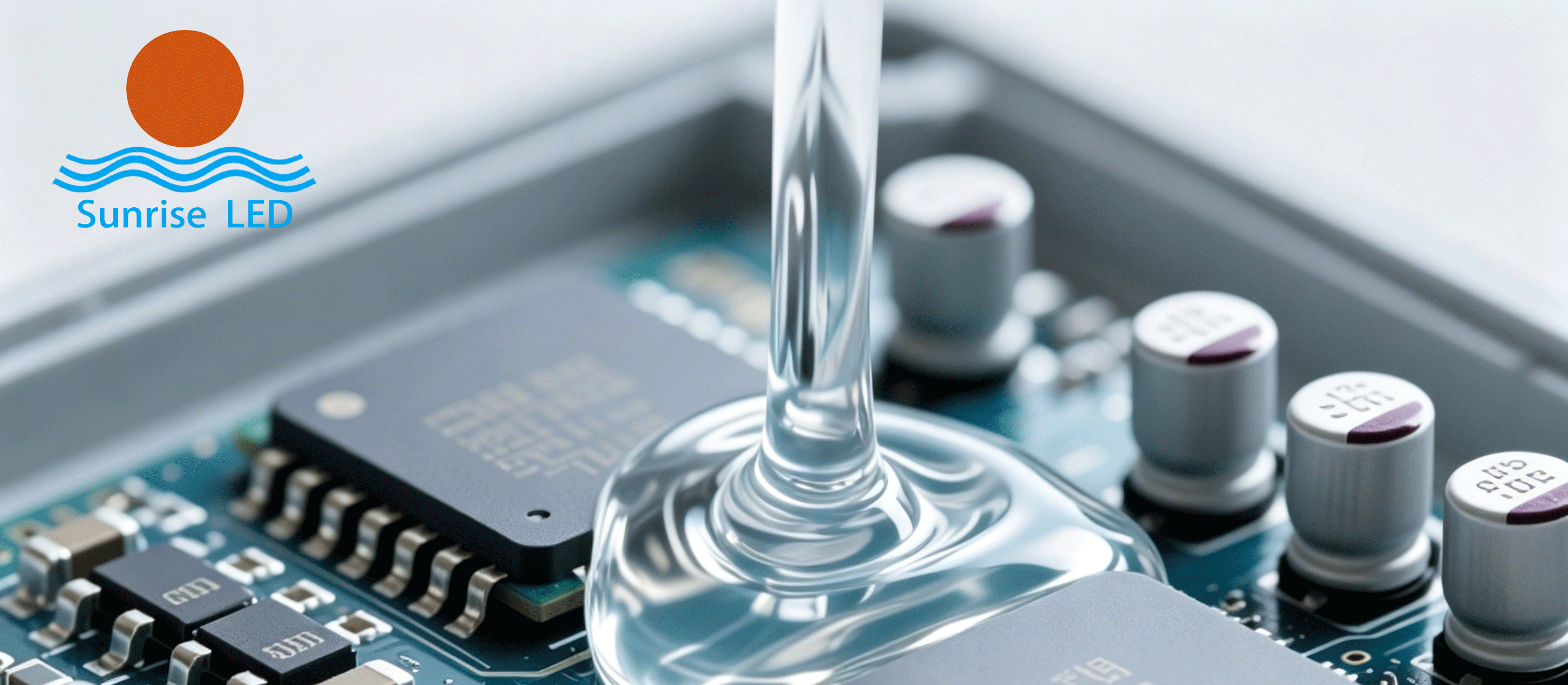
  • The integrated potting process for LED modules is a key technology to ensure the stable operation of LED modules in harsh environments such as outdoor and industrial settings. In simple terms, its core principle is to use special potting materials to fully and seamlessly wrap and seal core components inside the module, including LEDs, driver chips, and circuits, forming an integrated protective structure. This not only fixes the components and isolates external interference but also assists in heat dissipation, extending the service life of the module.
  • Core Prerequisite: Module Pre-treatment
  • Pre-treatment is the foundation for ensuring potting quality and a prerequisite for the smooth progress of subsequent processes. Its main purpose is to ensure a tight bond between the potting adhesive and module components, avoiding problems such as debonding and water leakage in later stages. Specific operations include two steps:
  • Substrate Cleaning: Thoroughly clean the LED module substrate to remove dust, oil, and moisture on the surface, preventing impurities from causing poor adhesion, voids, and compromised sealing performance. Masking of Non-Potting Areas**: Cover interfaces, pins, and other parts that do not require potting to prevent adhesive from clogging these critical areas, ensuring subsequent installation and normal operation of the module.
  • Core Process: Glue Potting and Molding
  • This is the central operation of integrated potting and the key difference from semi-potting processes. The procedure is straightforward with no complicated technical barriers, divided into two steps:
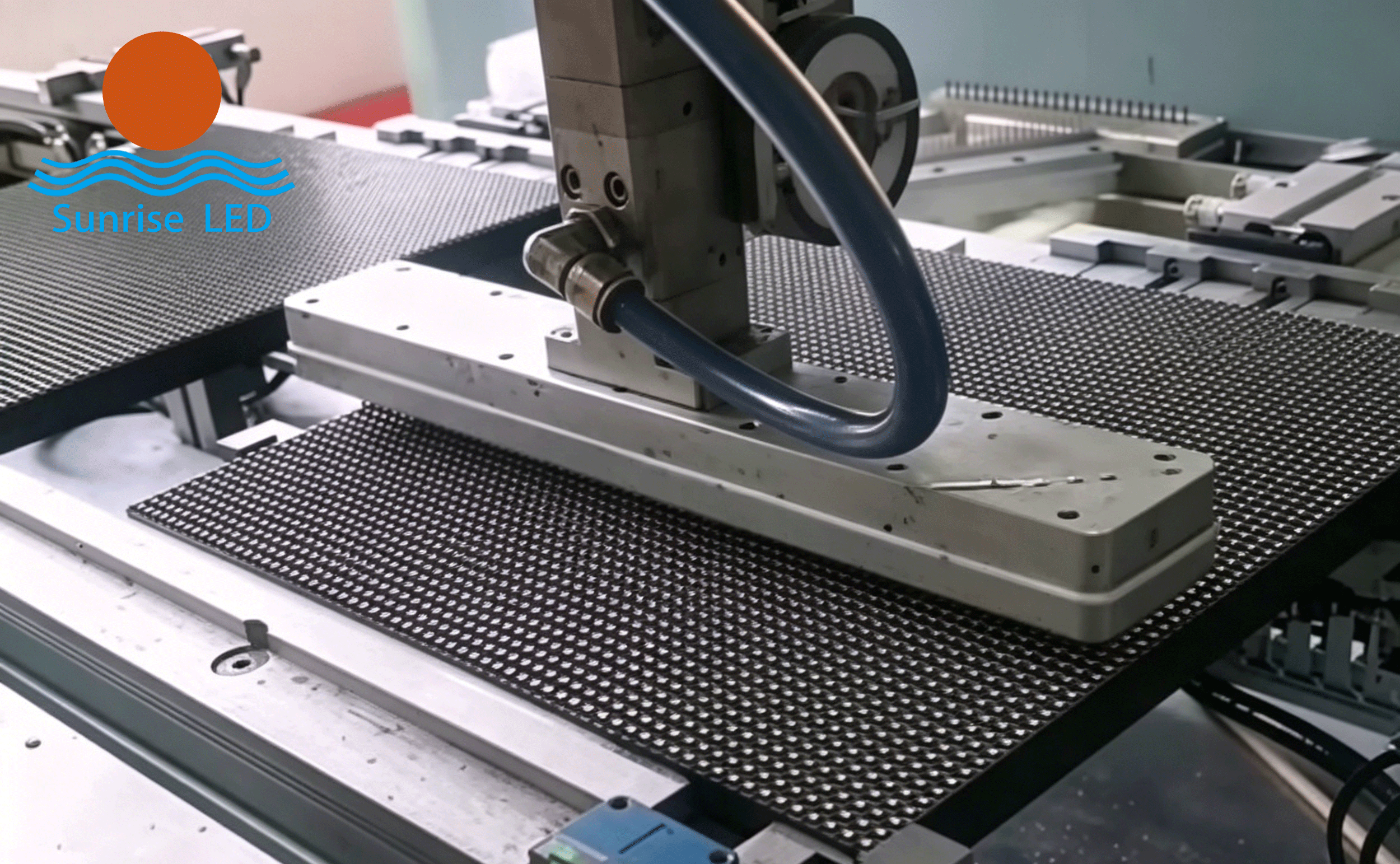
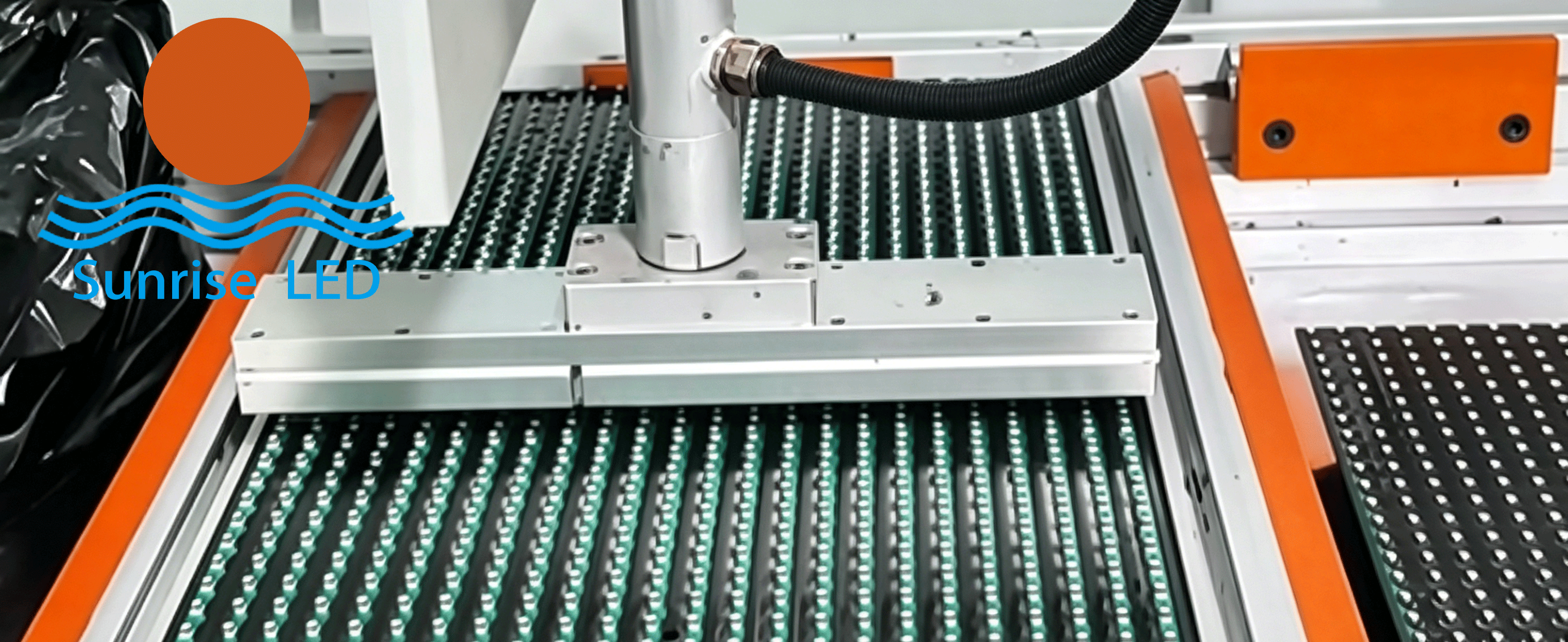
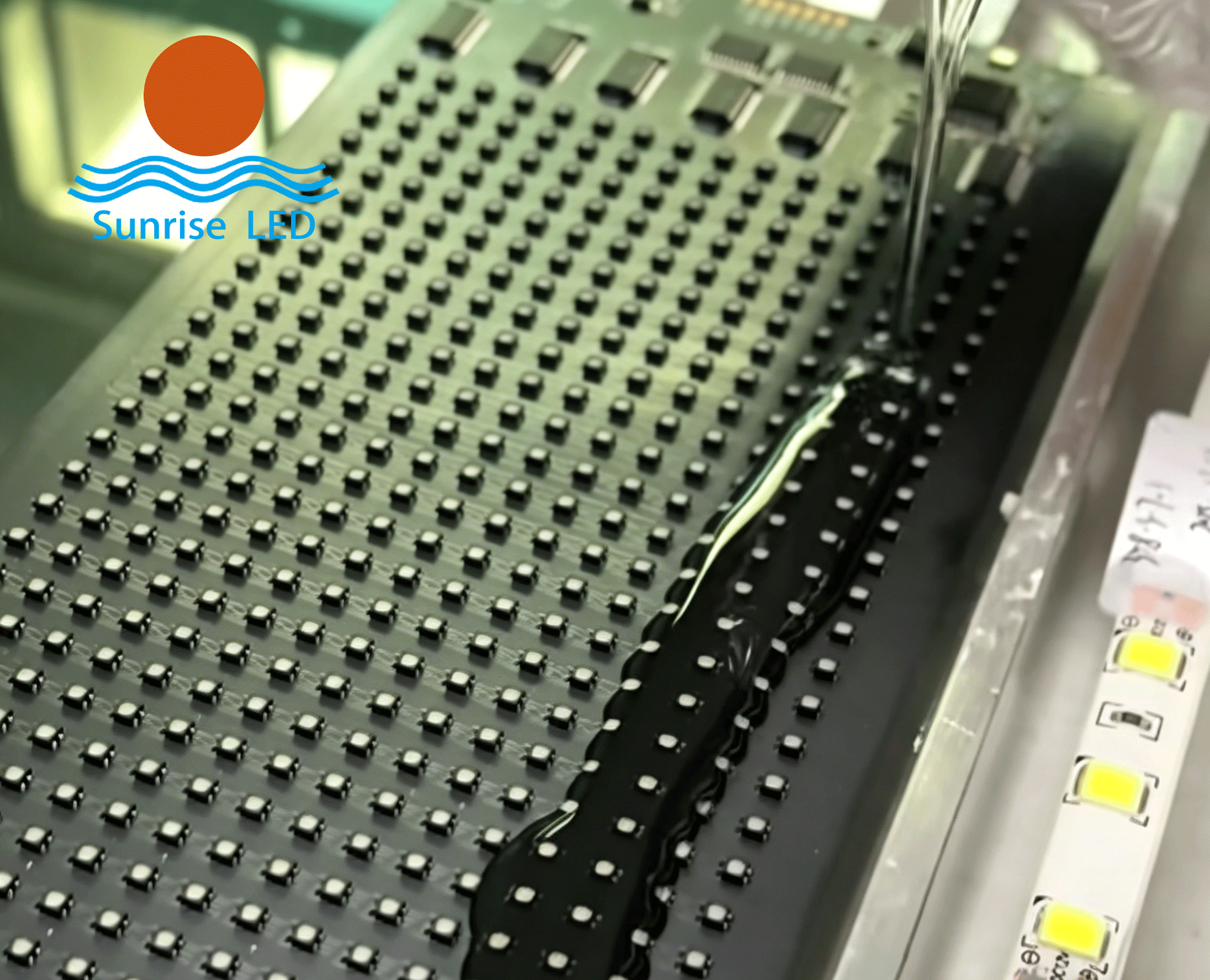
  • - **Potting Adhesive Mixing**: Fully mix special potting materials (commonly silicone, epoxy resin, etc.) in advance to ensure stable adhesive performance and avoid uneven mixing that would affect subsequent protection effects. - **Precision Glue Potting**: Inject the prepared adhesive evenly into the housing groove of the LED module via automated equipment or manually. Strictly control the injection speed and dosage to ensure the adhesive is free of bubbles and voids, completely filling all gaps inside the module to achieve full wrapping of core components.
  • Key Step: Curing and Molding Curing and molding is essential to realizing the protective function. Its purpose is to allow the potting adhesive to form a dense and tough protective layer. Two key points are involved:
  • - **Appropriate Curing Method**: According to the type of potting adhesive, adopt a matching curing method — either natural curing at room temperature or accelerated curing via low-temperature baking — to ensure full solidification of the adhesive. - **Post-Curing Effect**: After curing, the potting adhesive bonds tightly with the module housing, substrate, and internal components to form an inseparable whole. It not only secures internal parts but also blocks harmful external substances, preventing short circuits and aging of components.
  • Core Extension: Auxiliary Thermal Conductivity The role of the potting process goes beyond sealing and fixing; it also helps dissipate heat from the module to further ensure operational stability. Key points are as follows:
  • Thermal Conductivity of Potting Adhesive**: High-quality potting adhesive inherently has certain thermal conductivity and can act as a medium for heat transfer, avoiding heat accumulation. - **Heat Dissipation Process**: Heat generated by the LED module during operation (especially obvious in outdoor large-screen modules) is quickly conducted through the potting adhesive to the module housing and then dissipated outward. This achieves the dual functions of "sealing protection" and "heat dissipation assistance", prolonging the service life of LEDs and chips.
  • Summary Overall, the core principle of the integrated potting process for LED modules is uncomplicated. Essentially, through the standardized process of "cleaning pre-treatment → void-free glue potting → curing and molding", the potting adhesive builds a comprehensive protective barrier that isolates internal components from harsh external environments, while achieving fixation and thermal conductivity. This allows LED modules to adapt to complex scenarios such as outdoor, high-humidity, and high-dust environments, reducing failure rates and extending service life.
 

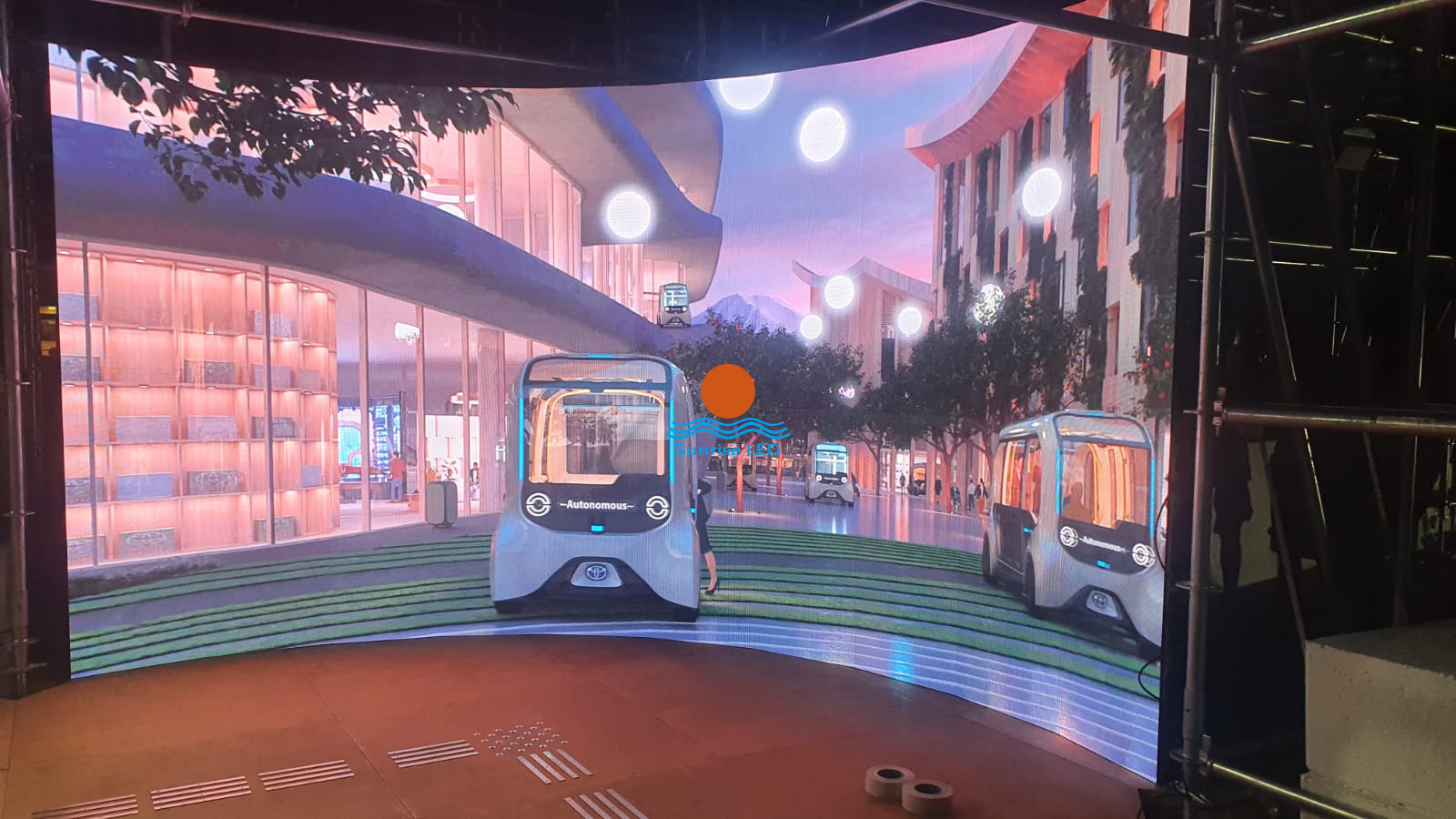
Technology | analysis of naked eye 3D display technology

At present, the naked eye 3D large screen market is hot, and 3D technology is also known as 3D di...
Do you like ?2,802 views

Read more

Sunrise’s p2.604 curved LED display lights up under the Eiffel Tower

Sunrise’s p2.604 curved LED display lights up under the Eiffel Tower     Sunri...

Do you like ?1,787 views

Read more

Sunrise LED Rocky Rental Series led display for concert

Concert activities are popular in the United States, and sunrise’s products have been wide...

Do you like ?2,362 views

Read more

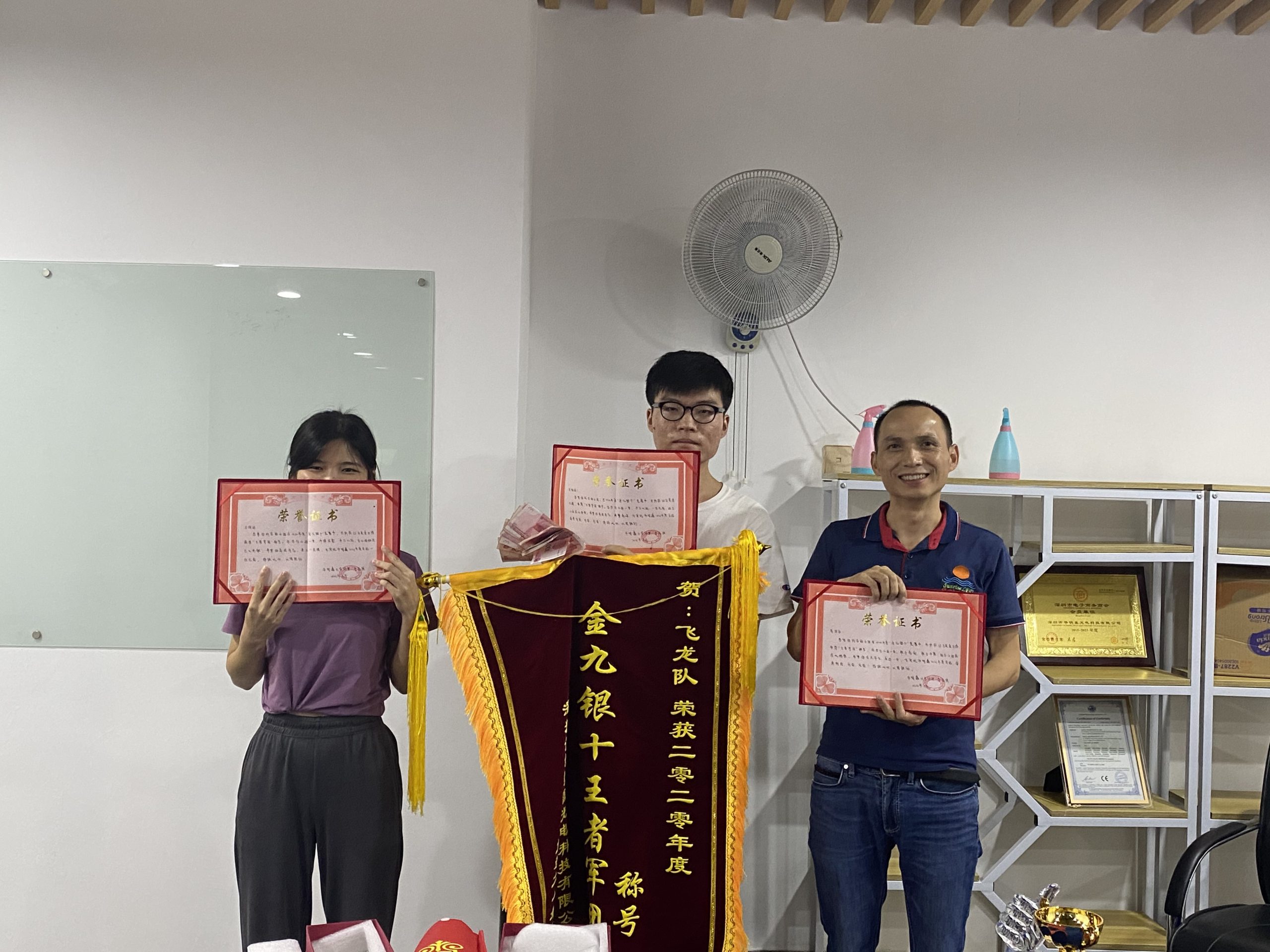
Sunrise 264 square meters Galaxy 3115 series mesh led facade in Armenia

  Sunrise 264 square meters Galaxy 3115 series mesh led facade in Armenia     Sun...
Do you like ?1,787 views

Read more

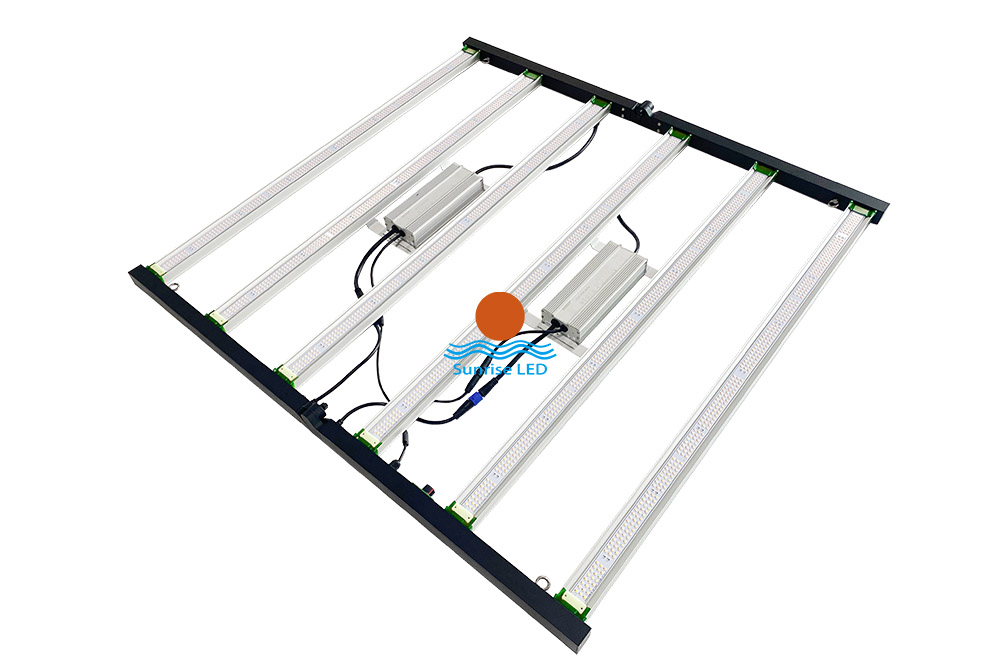
Sunrise led presents awards to excellent salesmen!

Doris, as a new salesman, won three orders in two months. It’s great.   Jack, the bu...
Do you like ?1,599 views

Read more

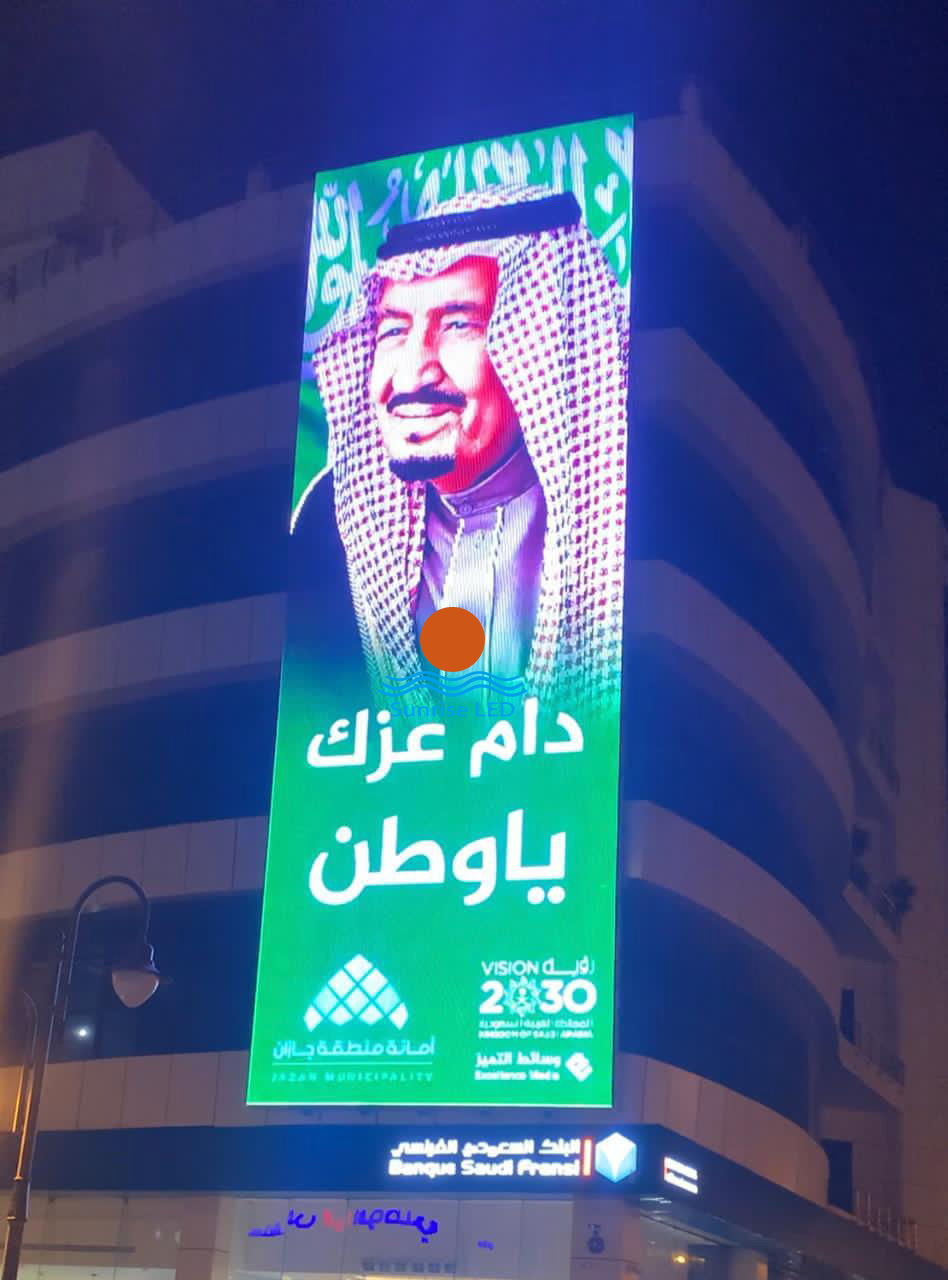
Our new product, led grow light, PPE reaches 2.6umol/j

640w and 800W full spectrum led grow light   It can be folded for convenient transportatio...
Do you like ?1,830 views

Read more

The latest project, Saudi Arabia LED MESH FACADE

The latest project, Saudi Arabia LED MESH FACADE. Ultra-high brightness, ultra-light LED display ...

Do you like ?2,363 views

Read more