news

Rental LED Displays vs. Fixed-Installation LED Displays: Differences in Structural and Circuit Design

15 views admin 2026-09-23
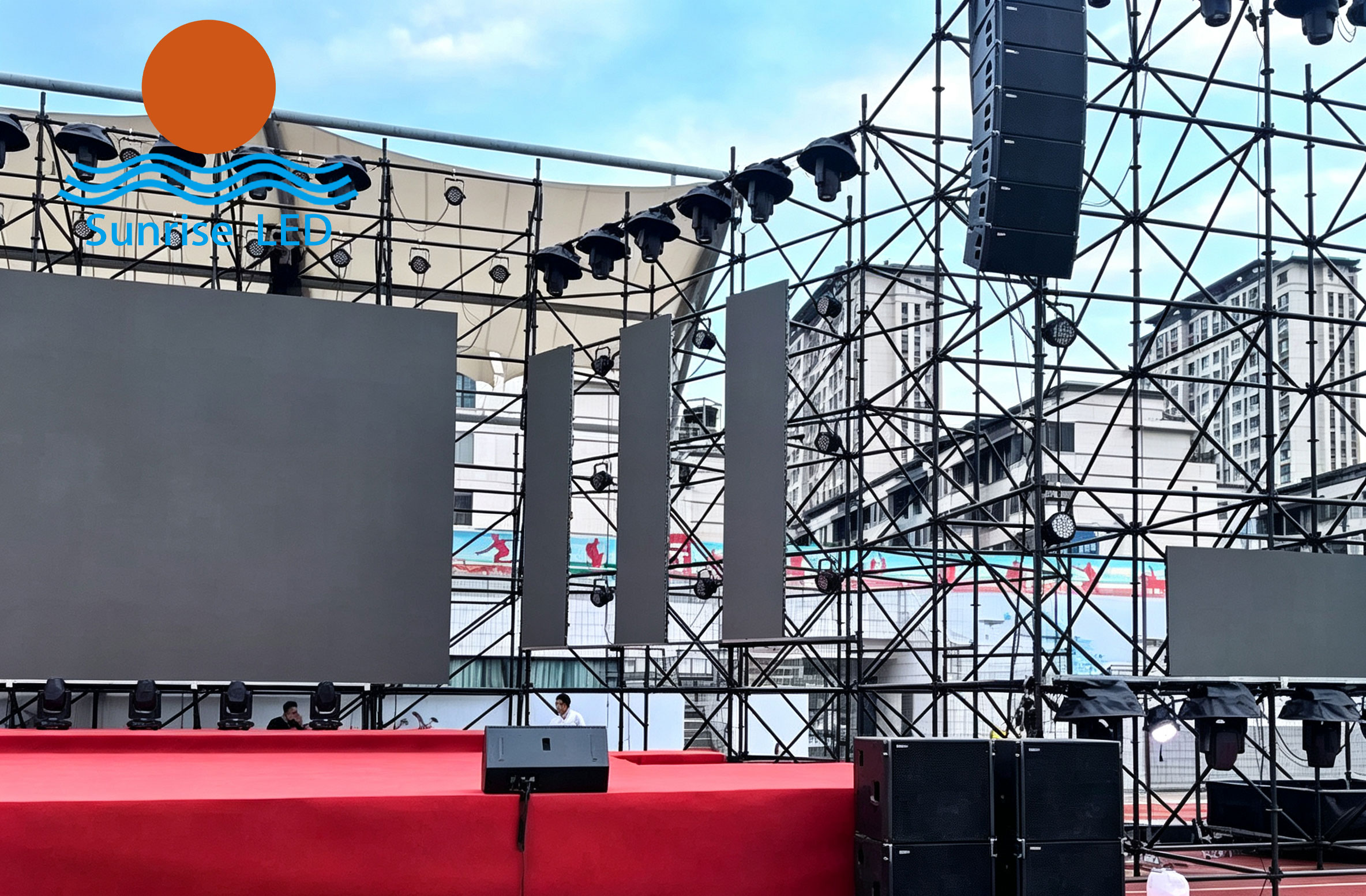
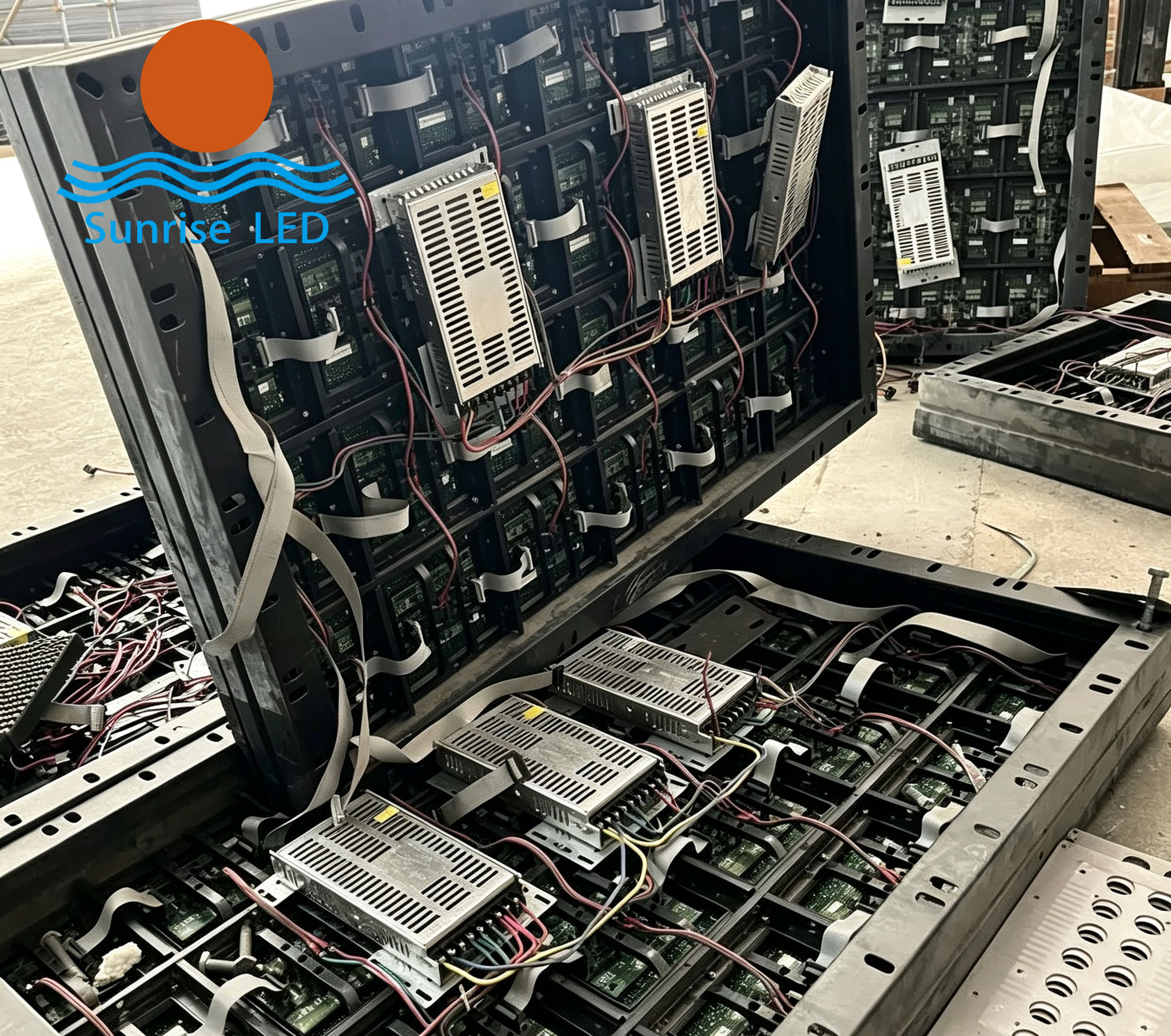
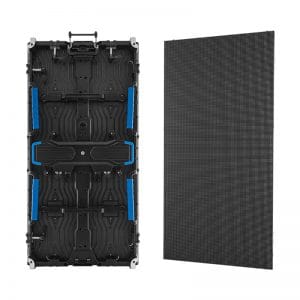
  • During the project selection phase, many people confuse rental displays with fixed-installation displays, assuming that the only difference is appearance. In fact, from cabinet structure and circuit layout to component selection, both are purpose-designed for their specific use scenarios. It is not simply a matter of swapping modules
  • I. Structural Design Differences
 
  • Design Objectives
 
  • Fixed-installation displays: Long-term fixed installation, with a service life of 5–10 years. Priority is given to structural rigidity, resistance to deformation, and environmental weather resistance
 
  • Rental displays: Frequent assembly/disassembly and repeated transport. The core requirements are fast splicing, lightweight design, and resistance to bumps and impact.
 
  • Cabinet Materials and Forms
 
  • Fixed-installation displays: Often use thickened sheet metal, profile cabinets, or thick die-cast aluminum, with a fully enclosed back panel and sufficient space reserved for heat dissipation and sealing.
 
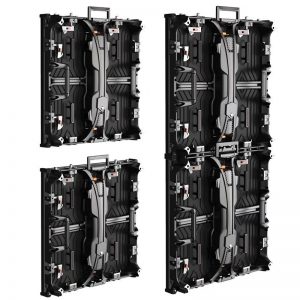
  • Rental displays: Mainly use lightweight, thin integrated die-cast aluminum cabinets. The back panels are mostly hollowed out to reduce overall weight and facilitate manual handling.
  • Splicing Locks
 
  • Fixed-installation displays: Fixed locking parts. After one-time installation, they are rarely disassembled. The focus is on ensuring long-term splicing flatness.
 
  • Rental displays: Quick locks + locating pins. Alignment is simple, allowing one person to assemble and disassemble quickly, suitable for rapid on-site screen setup and teardown.
 
  • Protection Capability
 
  • Fixed-installation displays: Can be fully sealed and achieve a relatively high IP rating, suitable for outdoor, humid, and dusty environments.
 
  • Rental displays: The hollowed-out design limits the protection rating. They are suitable only for temporary indoor use. Long-term outdoor exposure makes water ingress and dust accumulation likely.
  • II. Circuit Design Differences
 
  • Component Selection Logic
 
  • Fixed-installation displays: Use long-life, high-temperature-stability components, prioritizing the suppression of long-term operation aging and temperature drift.
 
  • Rental displays: Components also take lightweight requirements into account, focusing on withstanding vibration and shock. Component life margin is smaller than that of fixed-installation displays.
 
  • Connector Design
 
  • Fixed-installation displays: Connectors tend toward aging resistance. After one-time wiring, they remain stationary for long periods and are not suitable for repeated plugging and unplugging
 
  • Rental displays: Use vibration-resistant, anti-loosening quick connectors that support frequent plugging and unplugging. However, after the plug/unplug cycle limit is reached, poor contact is likely
 
  • Power Supply and Control System
 
  • Fixed-installation displays: Large projects often configure redundant power supplies and receiving cards to ensure uninterrupted 24/7 stable operation. Commissioning parameters remain unchanged over the long term
 
  • Rental displays: Circuit protection focuses on instantaneous overload and short-circuit prevention during plugging/unplugging. The control system supports rapid calibration and module replacement, adapting to temporary on-site commissioning
 
  • Wiring Process
 
  • Fixed-installation displays: Wiring is treated for moisture and corrosion resistance to reduce wiring failures after years of use.
 
  • Rental displays: Reduce exposed loose wiring and use integrated wiring to lower the risk of wire breakage caused by pulling during transport.
 
  • III. Summary of Selection Boundaries
 
  • Fixed-installation displays: Resist aging over time, with strong structure and good protection. Suitable for command centers, outdoor large screens, and permanent exhibition hall projects. Drawbacks: difficult to assemble and disassemble; repeated assembly/disassembly can easily damage sealing and structure.
 
  • Rental displays: Resist repeated assembly/disassembly and vibration, and are lightweight and quick to install. Suitable for exhibitions, evening performances, and other temporary events. Shortcomings: weak protection; connector and LED failure rates rise with the number of assembly/disassembly cycles.
       

Technology | analysis of naked eye 3D display technology

At present, the naked eye 3D large screen market is hot, and 3D technology is also known as 3D di...
Do you like ?3,213 views

Read more

Sunrise’s p2.604 curved LED display lights up under the Eiffel Tower

Sunrise’s p2.604 curved LED display lights up under the Eiffel Tower     Sunri...
Do you like ?2,093 views

Read more

Sunrise LED Rocky Rental Series led display for concert

Concert activities are popular in the United States, and sunrise’s products have been wide...
Do you like ?2,715 views

Read more

Sunrise 264 square meters Galaxy 3115 series mesh led facade in Armenia

  Sunrise 264 square meters Galaxy 3115 series mesh led facade in Armenia     Sun...
Do you like ?2,063 views

Read more

Sunrise led presents awards to excellent salesmen!

Doris, as a new salesman, won three orders in two months. It’s great.   Jack, the bu...
Do you like ?1,914 views

Read more

Our new product, led grow light, PPE reaches 2.6umol/j

640w and 800W full spectrum led grow light   It can be folded for convenient transportatio...
Do you like ?2,151 views

Read more

The latest project, Saudi Arabia LED MESH FACADE

The latest project, Saudi Arabia LED MESH FACADE. Ultra-high brightness, ultra-light LED display ...

Do you like ?2,692 views

Read more