news

How Do LED-Backlit Displays Produce Light?

5 views admin 2026-11-20
  • LED-backlit displays have become ubiquitous in our daily lives—appearing everywhere from televisions and computer monitors to smartphone screens. But have you ever wondered how this "LED backlight" actually makes a screen light up? Today, we’ll break down how LED-backlit displays work in the simplest, most accessible terms.
  • The "Heart" of an LED-Backlit Display: LED Beads
 
  • First, it’s important to understand that an LED-backlit display doesn’t "emit" light on its own. It is a "passive" display technology, meaning it requires an external light source to illuminate it. This external source consists of what we call LEDs (light-emitting diodes).
 
  • Think of your display as a semi-transparent image—one that has no inherent color or light. To see what’s on it, we need to shine a light from behind. The LED backlight acts as the "flashlight" that provides this illumination.
 
  • How LED Backlighting Works: From "Light" to "Image"
 
  • So, how do these LEDs transform light into the images we see? This process involves several key components working in tandem:
 
  • LED Array: As the name suggests, these are small LED bulbs arranged densely behind the display. They emit white light.
 
  • Configuration Types: Early LED-backlit technology primarily used an "edge-lit" design, where LEDs are positioned along the edges of the display, with a light guide plate used to distribute the light evenly across the screen. More advanced, high-end displays now use a "direct-lit" (or full-array) design, where LEDs are distributed evenly across the entire area behind the screen. This allows for more precise, localized light control, which enhances contrast.
 
  • Light Guide Plate (LGP): In edge-lit displays, light first enters a transparent component called a light guide plate. The LGP acts as a "conduit" for light, spreading the illumination from the edges uniformly across the entire screen surface to ensure consistent brightness. Diffusion and Prism Films: Even with a light guide plate, the light may still lack sufficient uniformity or brightness. This is where diffusion and prism films come into play. Diffusion films further soften the light, eliminating potential bright spots or dark areas. Prism films, meanwhile, focus the light, enhancing the overall brightness of the screen.
  • Liquid Crystal Layer: This is the "soul" of an LED-backlit display. Liquid crystals do not emit light themselves; however, they possess a remarkable property: under the influence of an applied voltage, the orientation of their molecules shifts, which in turn controls whether light can pass through and at what angle it is deflected.
 
  • Key Insight: The discovery and application of liquid crystal technology represent a major milestone in the evolution of modern display technology. You can think of liquid crystal molecules as countless tiny "blinds"—by adjusting the voltage, these "blinds" can be opened, closed, or set to a partially open position, thereby determining how much backlight is allowed to pass through.
 
  • Color Filter: After passing through the liquid crystal layer, the backlight encounters a color filter. Each pixel consists of three sub-pixels: red (R), green (G), and blue (B). The color filter "tints" the incoming white light, ensuring that each sub-pixel displays its corresponding color.
 
  • Polarizer: Polarizers are positioned on both sides of the liquid crystal layer. Their function is to filter out light waves oriented in specific directions. By altering the polarization of the light, the liquid crystal layer—in conjunction with these polarizers—enables precise control over the amount of light that passes through.
 
  • To summarize the process:
 
  • LEDs emit white light → the light passes through a light guide plate, diffusion film, and prism film, becoming uniform and bright → the white light travels through the liquid crystal layer (where molecules regulate the amount of light based on electrical signals) → it passes through a color filter to be "tinted" → ultimately forming the vibrant, multi-colored images we see. Advantages of LED-Backlit Displays
 
  • LED backlighting has replaced traditional CCFL (Cold Cathode Fluorescent Lamp) backlighting, primarily due to the following significant advantages:
 
  • Thinner Design: The small size of LED components allows displays to be built with a thinner, more lightweight profile.
 
  • Greater Energy Efficiency: LEDs offer high luminous efficiency and lower power consumption, aligning with modern eco-friendly standards.
 
  • Higher Brightness and Improved Contrast: LEDs can deliver greater brightness. Furthermore, direct-lit LED backlighting enables "local dimming"—making dark areas darker and bright areas brighter—which significantly enhances the contrast of the image.
 

Technology | analysis of naked eye 3D display technology

At present, the naked eye 3D large screen market is hot, and 3D technology is also known as 3D di...
Do you like ?3,366 views

Read more

Sunrise’s p2.604 curved LED display lights up under the Eiffel Tower

Sunrise’s p2.604 curved LED display lights up under the Eiffel Tower     Sunri...

Do you like ?2,203 views

Read more

Sunrise LED Rocky Rental Series led display for concert

Concert activities are popular in the United States, and sunrise’s products have been wide...
Do you like ?2,881 views

Read more

Sunrise 264 square meters Galaxy 3115 series mesh led facade in Armenia

  Sunrise 264 square meters Galaxy 3115 series mesh led facade in Armenia     Sun...

Do you like ?2,151 views

Read more

Sunrise led presents awards to excellent salesmen!

Doris, as a new salesman, won three orders in two months. It’s great.   Jack, the bu...
Do you like ?2,000 views

Read more

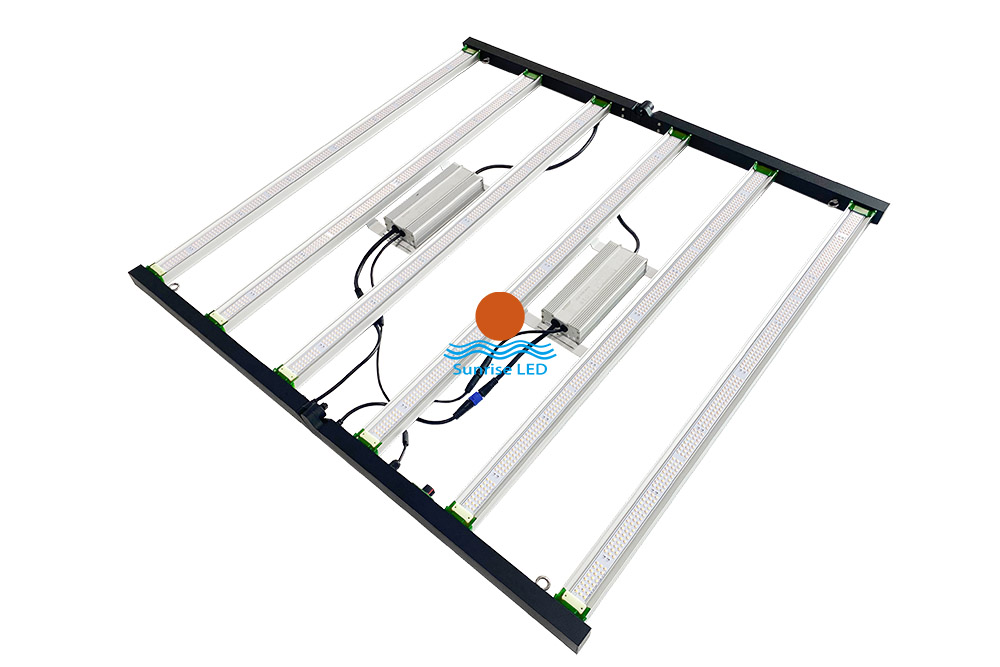
Our new product, led grow light, PPE reaches 2.6umol/j

640w and 800W full spectrum led grow light   It can be folded for convenient transportatio...
Do you like ?2,242 views

Read more

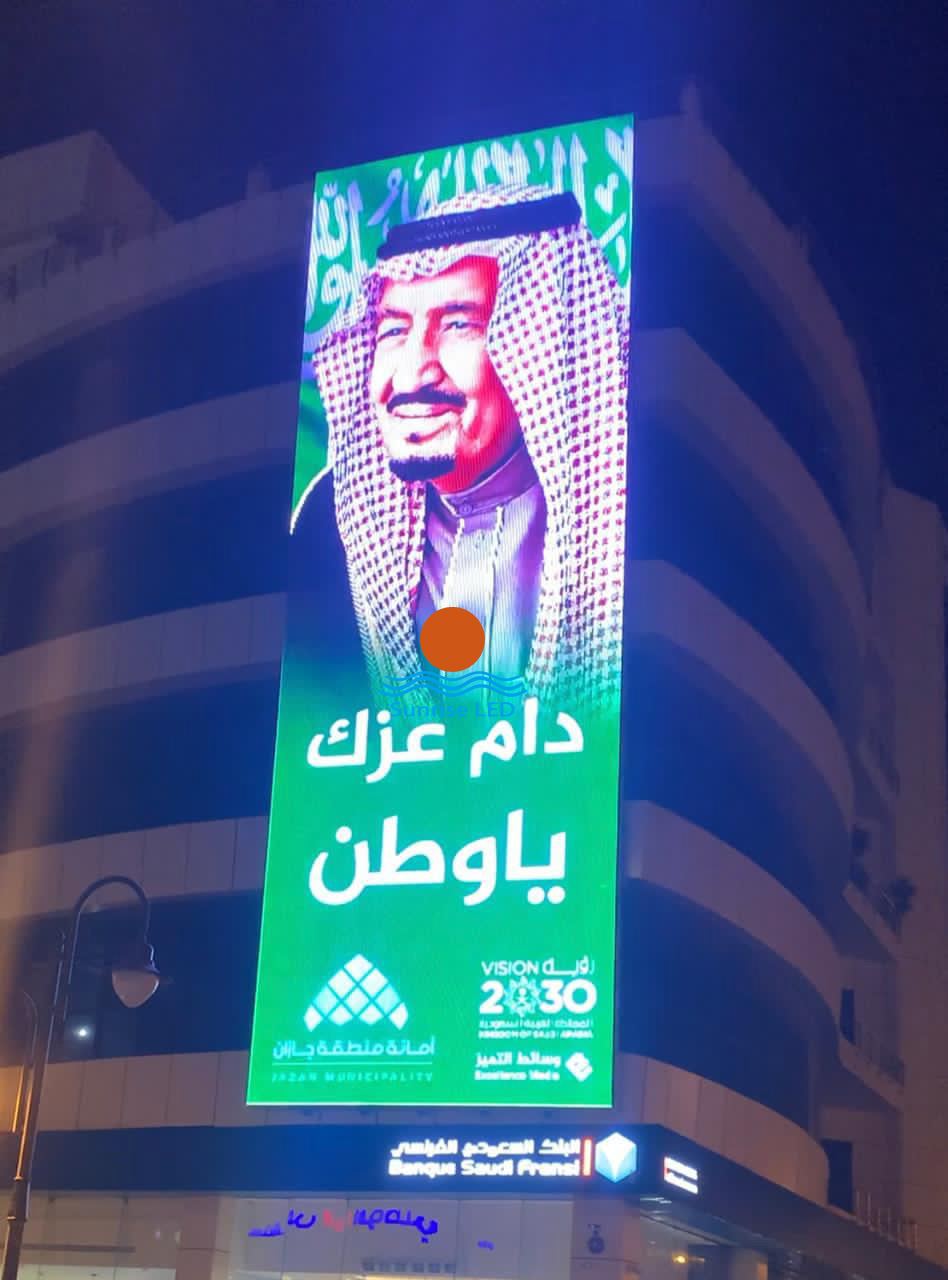
The latest project, Saudi Arabia LED MESH FACADE

The latest project, Saudi Arabia LED MESH FACADE. Ultra-high brightness, ultra-light LED display ...

Do you like ?2,787 views

Read more