news

Can Photoelectric Glass Screens Become a Dark Horse in the Segmented LED Transparent Display Track?

4 views admin 2026-06-26

  • Driven by continuous urban development, widespread nightscape lighting projects and the rapid boom of immersive experience economy, demand for digital transformation of glass-based scenarios has surged. Featuring ultra-thin profiles and high transparency with flexible installation, LED transparent screens have become core display products for upgrading retail shop windows, building curtain walls and cultural tourism venues. At present, mainstream transparent display products on the market include grid screens, film-attached screens, crystal film screens, photoelectric glass screens and holographic screens. Each category fits distinct application scenarios with vast gaps in technical barriers and market positioning. Among them, LED photoelectric glass transparent screens stand out from numerous segmented products thanks to their building-integrated design and ultra-high light transmittance, making them a high-growth-potential track.
  • Steady Overall Growth of the Transparent Display Industry Amid Widening Segmentation Gaps
  • The entire LED transparent display industry is currently on a steady upward trajectory, with market demand continuously unlocked across three core sectors: commercial, cultural tourism and construction. Industry statistics show that global sales volume of transparent screens reached approximately 2.26 billion RMB in 2025, representing a year-on-year increase of 6.8%. The industry’s overall growth rate remains moderate, shifting from extensive expansion to refined, quality-oriented development. As the market matures, segmentation within the transparent display track has grown increasingly prominent, with widening gaps between different product types in technical logic, application scope and market scale.
  • Grid screens and film-attached screens are widely popular transparent display options with mature technology, standardized mass production and low manufacturing costs. They are mostly deployed in retail shop windows, outdoor lighting and advertising displays. Low entry barriers have attracted countless market players, triggering cutthroat competition and severe price wars. In contrast, photoelectric glass transparent screens currently account for only 10%–15% of the global transparent display market, a relatively modest share. However, this product boasts higher technical thresholds and stricter industry access requirements than conventional transparent screens, resulting in far less competitive pressure. Amid pervasive homogeneous price competition, photoelectric glass screens with solid technical moats and strong irreplaceability have become a key direction for differentiated industrial development.
  • Unique Product Attributes Form Irreplaceable Core Competitiveness
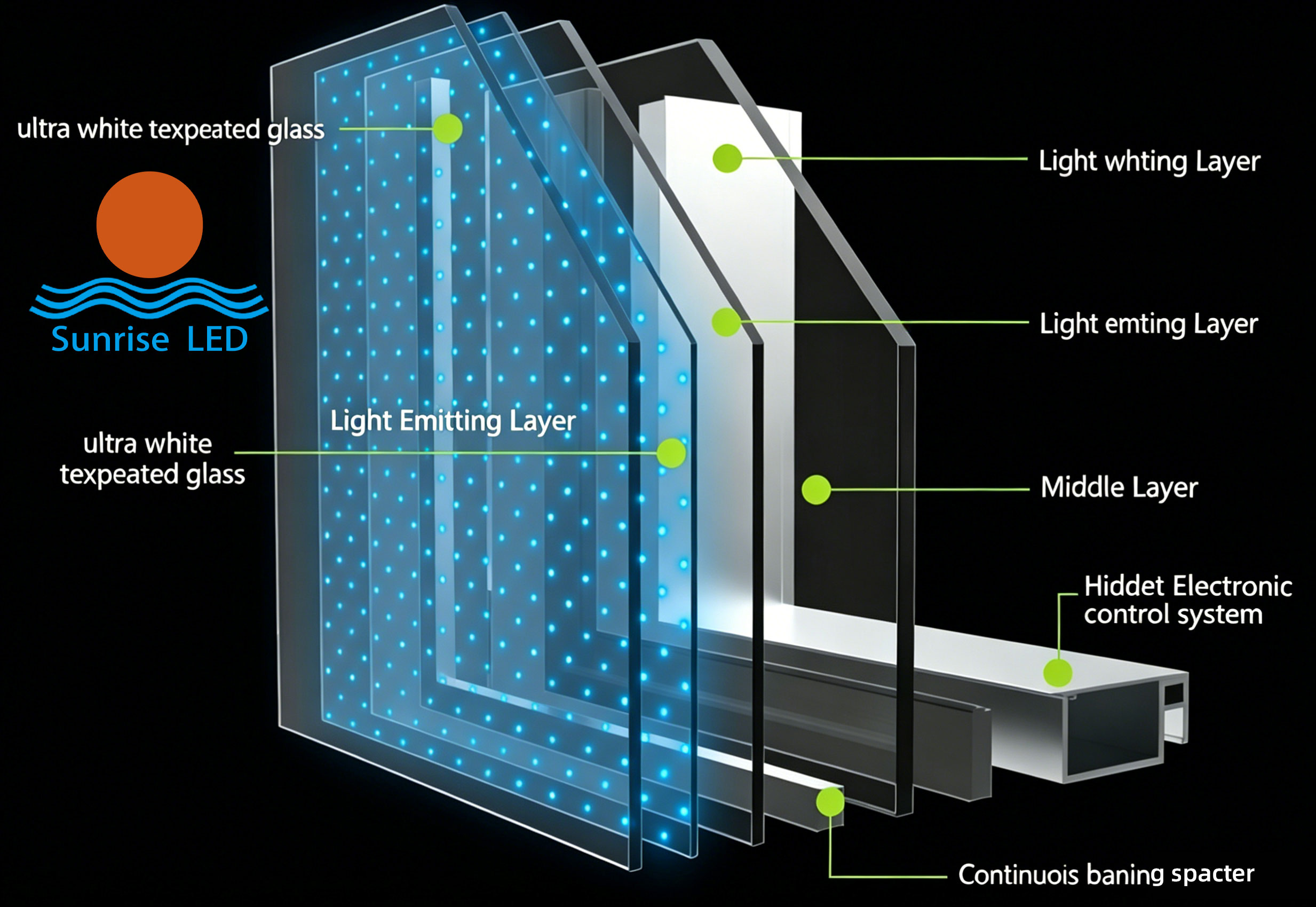
  • The outstanding performance of LED photoelectric glass transparent screens stems fundamentally from their exclusive structural design and differentiated functional positioning. Unlike conventional externally mounted transparent screens, photoelectric glass screens adopt special packaging technology to hermetically seal LED modules between two layers of tempered glass. This integrated structure balances safety and aesthetics, fundamentally distinguishing it from externally attached transparent displays such as film and grid screens.
  • Its most intuitive advantage lies in exceptional light transmittance of over 95%, fully preserving the glass’s inherent architectural functions including natural lighting, landscape viewing and sound insulation. Meanwhile, the product supports transparent playback of high-definition dynamic images, videos and text. Equipped with high brightness and high refresh rate, it delivers balanced display effects day and night, with striking visual performance after dark.
  • Furthermore, its building-integrated design is a key differentiator from other transparent screens. Most conventional transparent screens are retrofitted attachments mounted on existing glass surfaces, while photoelectric glass screens can directly replace traditional curtain wall glass and be embedded into building facades, deeply integrating display functionality with architectural structures. Customizable in size, shape and brightness, the product adapts to special scenarios such as irregular buildings and creative landscapes, combining decorative value, practicality and commercial benefits for high-end office towers, urban landmarks and cultural tourism attractions.
  • Dual Expansion of Application Scenarios Unlocks Sustained Market Growth Potential
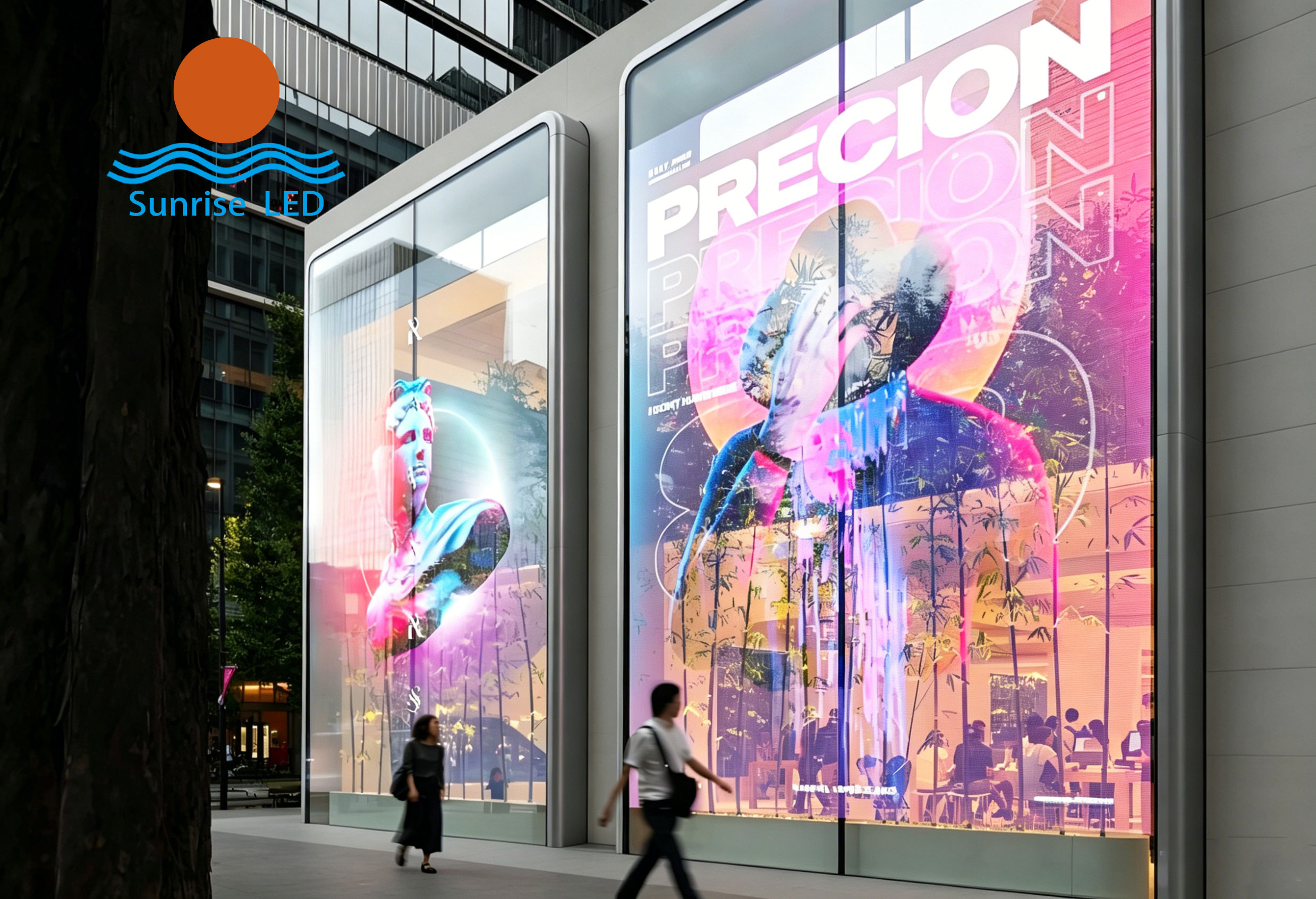
  • In terms of application deployment, photoelectric glass screens have formed a dual layout covering large-format high-end buildings and small-format creative decorations, with continuously expanding scenario coverage and market boundaries. For large-scale outdoor applications, building curtain walls represent its core target segment. Compared with traditional glass curtain walls, photoelectric glass screens retain basic enclosure and lighting functions while creating landmark building facades that boost architectural recognition and commercial added value. The product has been widely deployed in urban complexes, premium office buildings, night tourism landmarks and outdoor landscape projects, catering to urban renewal and nightscape lighting demands.
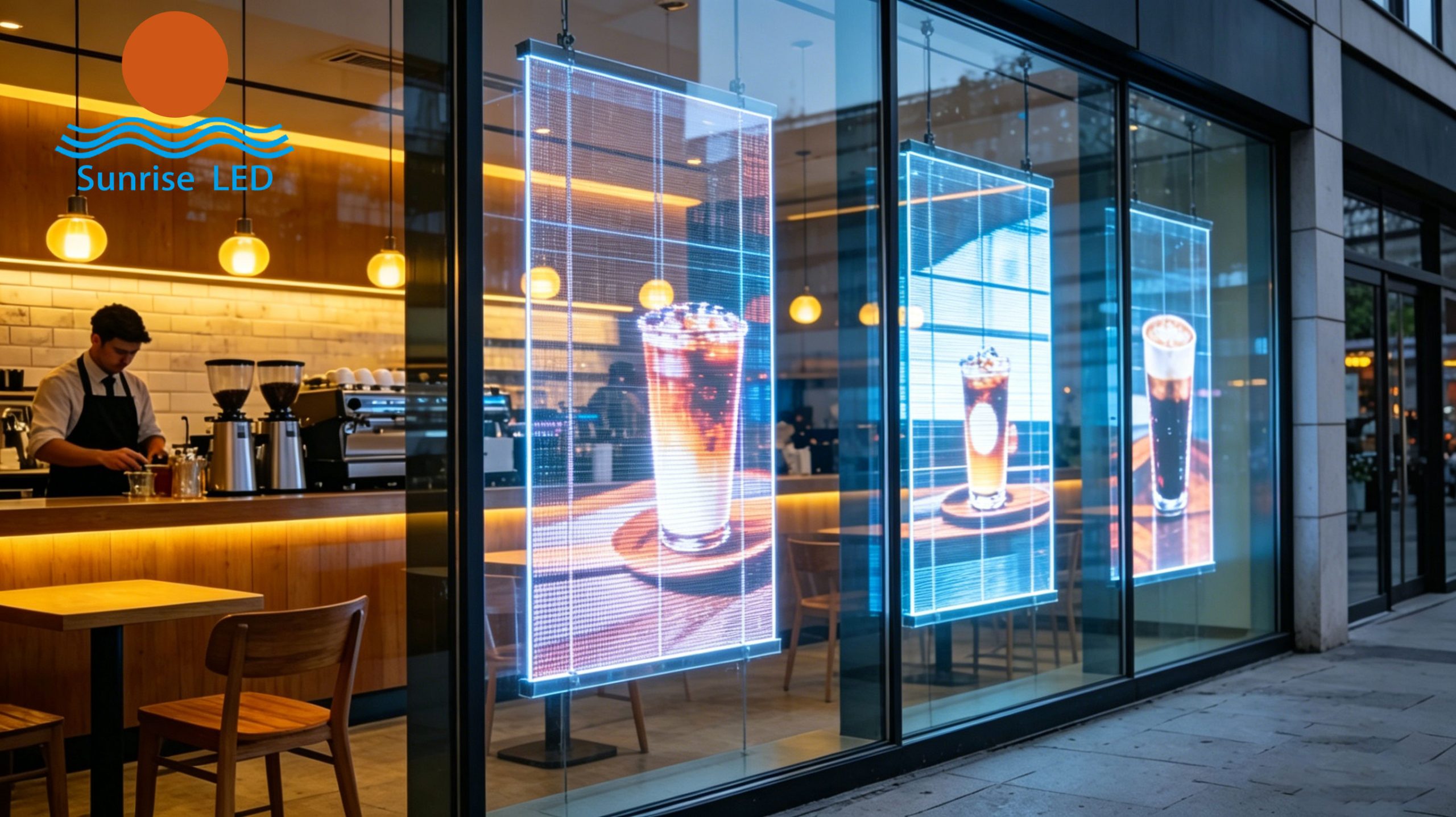
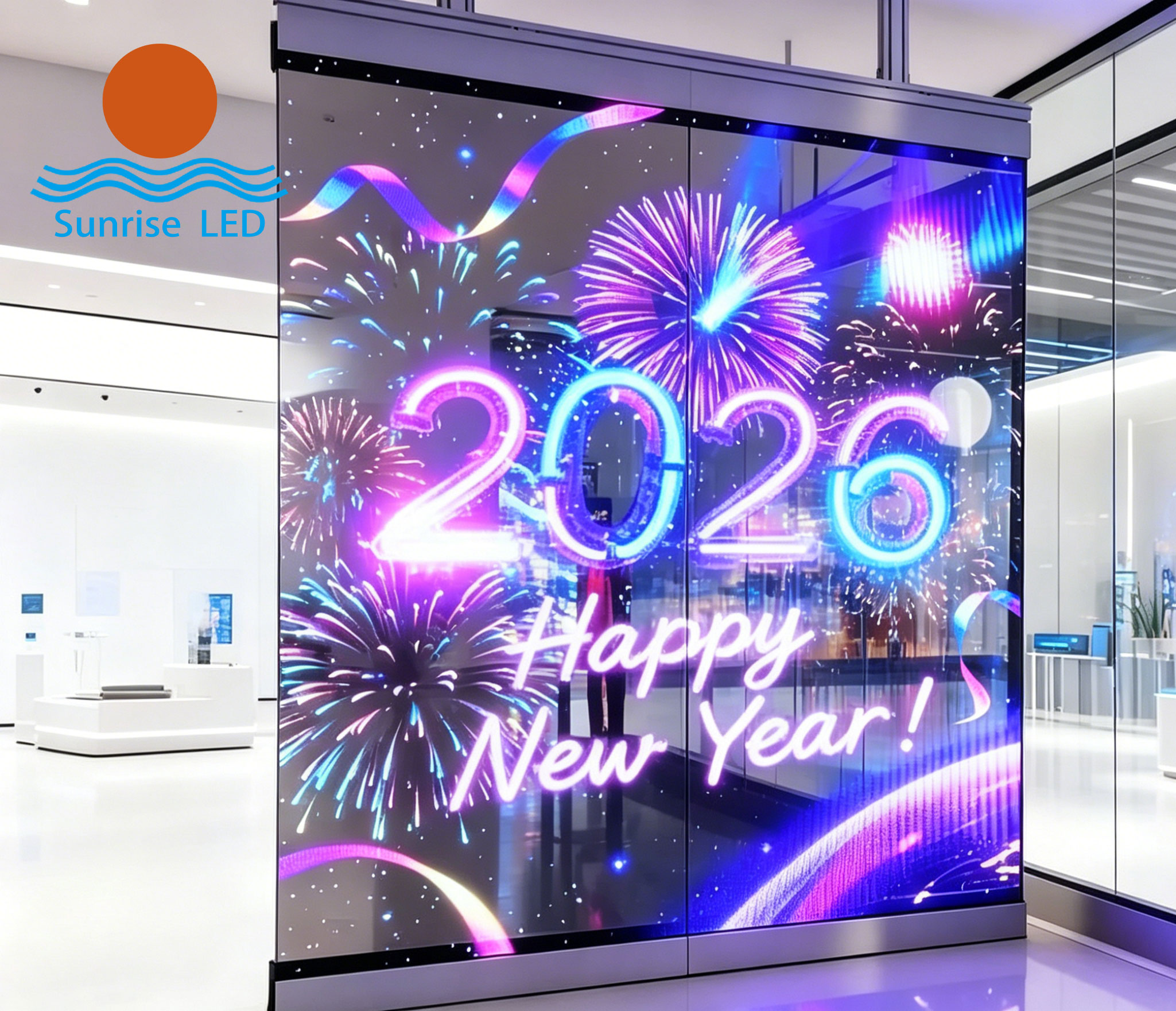
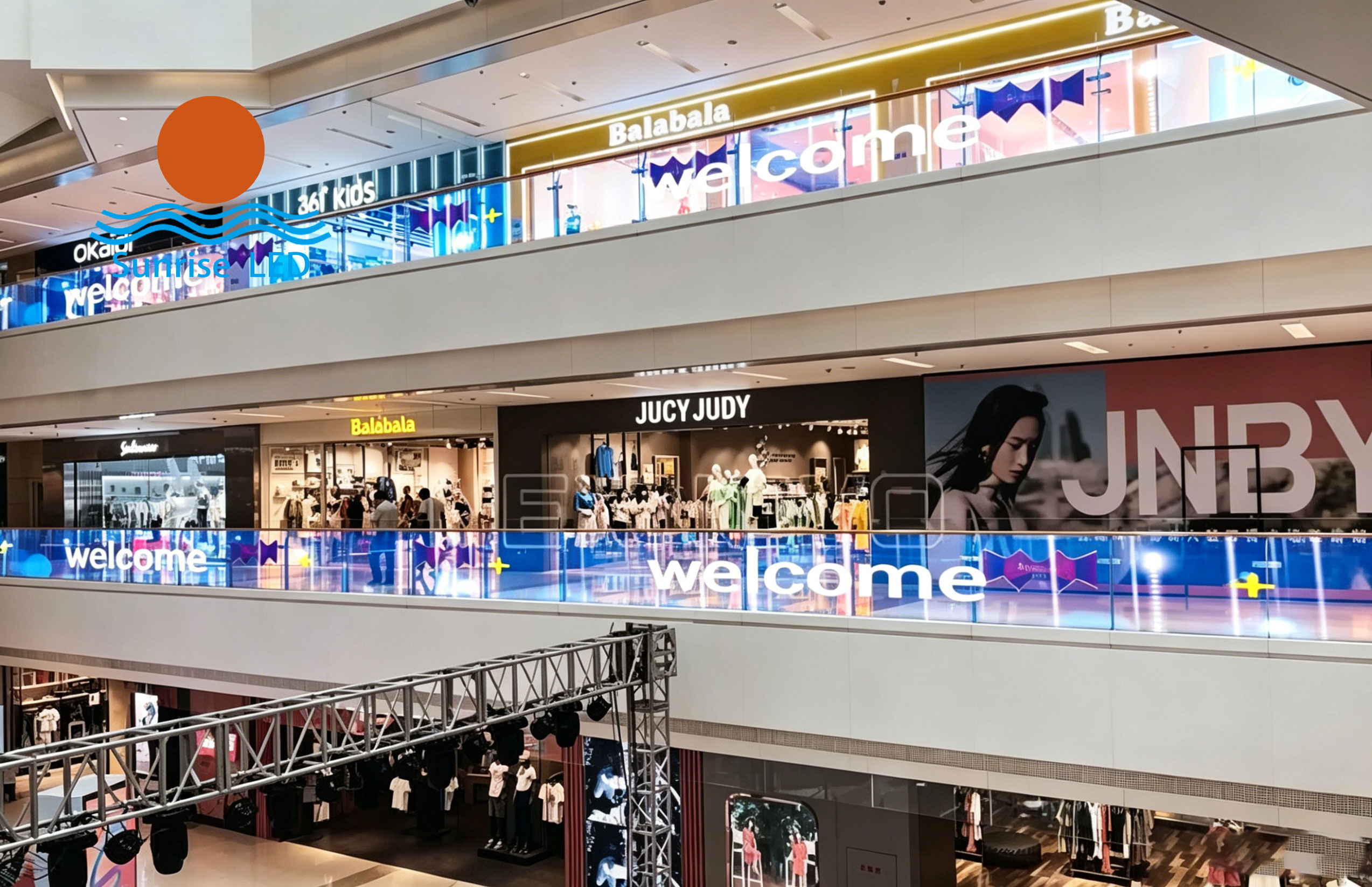
  • In small-format applications, photoelectric glass screens are rapidly penetrating creative niche markets, including retail shop windows, exhibition partitions, stage backdrops, immersive art installations and indoor decorative features. Leveraging high transparency, sleek appearance and lightweight design, it eliminates the bulky obstructive flaws of traditional displays, fully meeting demands for brand showcase, artistic expression and immersive space construction. Aligned with consumption upgrading and scenario innovation trends, it functions as both a building material and advertising medium. As demand for premium visual solutions rises in commercial real estate and cultural tourism, market adaptability for photoelectric glass screens will keep climbing.
  • Prominent Industrial Pain Points Hinder Large-Scale Popularization in the Short Term
  • Despite prominent development advantages, photoelectric glass screens face obvious industrial bottlenecks restricting full market penetration in the near term — the primary reason behind its current low market share. First, the technical barrier remains high. The product integrates glass processing, LED packaging and intelligent control technologies, involving complex R&D and manufacturing workflows with stringent standards for production equipment, craftsmanship and quality control. Only 30 to 40 domestic manufacturers are capable of mass production, and no single enterprise specializes solely in this product line, limiting overall industrial supply capacity.
  • Second, an inherent conflict exists between customization and mass production. At present, photoelectric glass screen orders are dominated by non-standard custom projects. Small-batch, personalized production leads to low efficiency, preventing large-scale manufacturing effects and keeping raw material, production and operation costs high. The resulting premium pricing limits acceptance among mass clients. Additionally, outdoor deployment poses challenges: long-term exposure to harsh outdoor environments compromises the weather resistance and stability of electronic components. Complicated post-installation inspection and maintenance procedures drive up operational costs, restricting widespread outdoor rollout.
  • From a product selection perspective, photoelectric glass screens are not universal solutions. Traditional glass curtain walls remain the optimal choice for projects with tight budgets prioritizing basic enclosure and low maintenance requirements. Only high-end projects with sufficient budgets, dynamic display needs and a focus on commercial added value are suitable for photoelectric glass screens, further narrowing its applicable scope.
  • Confirmed Long-Term Potential Awaiting an Industry Inflection Point
  • Based on comprehensive analysis of industry data, product characteristics and market conditions, photoelectric glass screens cannot displace conventional transparent screens or traditional glass curtain walls in the short run due to constraints on cost, technology and mass production, maintaining a niche high-end deployment model. Nevertheless, the track boasts far more opportunities than challenges in the long term, with inherent conditions to become a breakout dark horse in the transparent display segment.
  • On one hand, dual policy and market dividends from urban construction, green architecture and night tourism continue to unfold, driving steady growth in demand for digital transformation of premium buildings and laying a solid market foundation for photoelectric glass screens. On the other hand, continuous technological iteration and maturing manufacturing processes will enable mass production, steadily lowering industrial costs and improving product cost performance. Upgrades to component weather resistance and maintenance convenience will further resolve outdoor application pain points and expand deployment boundaries.
  • Supported by high technical barriers, building-integrated strengths and exclusive compatibility with high-end scenarios, photoelectric glass screens avoid low-end price wars and embark on a differentiated development path. Rather than a short-lived trending product, it is a long-cycle category aligned with the trends of architectural digitalization and premium scenario construction. Though its growth is tempered by cost and production limits at present, its unique value secures its foothold in high-end markets. As industrial bottlenecks are gradually resolved, it is poised to progressively replace high-end architectural glass curtain walls, evolve into a core architectural display product, and emerge as a high-growth, high-potential dark horse segment within the LED transparent display industry.
 

Technology | analysis of naked eye 3D display technology

At present, the naked eye 3D large screen market is hot, and 3D technology is also known as 3D di...
Do you like ?2,962 views

Read more

Sunrise’s p2.604 curved LED display lights up under the Eiffel Tower

Sunrise’s p2.604 curved LED display lights up under the Eiffel Tower     Sunri...
Do you like ?1,927 views

Read more

Sunrise LED Rocky Rental Series led display for concert

Concert activities are popular in the United States, and sunrise’s products have been wide...
Do you like ?2,509 views

Read more

Sunrise 264 square meters Galaxy 3115 series mesh led facade in Armenia

  Sunrise 264 square meters Galaxy 3115 series mesh led facade in Armenia     Sun...
Do you like ?1,908 views

Read more

Sunrise led presents awards to excellent salesmen!

Doris, as a new salesman, won three orders in two months. It’s great.   Jack, the bu...
Do you like ?1,718 views

Read more

Our new product, led grow light, PPE reaches 2.6umol/j

640w and 800W full spectrum led grow light   It can be folded for convenient transportatio...
Do you like ?1,956 views

Read more

The latest project, Saudi Arabia LED MESH FACADE

The latest project, Saudi Arabia LED MESH FACADE. Ultra-high brightness, ultra-light LED display ...

Do you like ?2,503 views

Read more