news

Three Core Technologies of LED Displays in XR/VP Virtual Production

9 views admin 2026-03-18
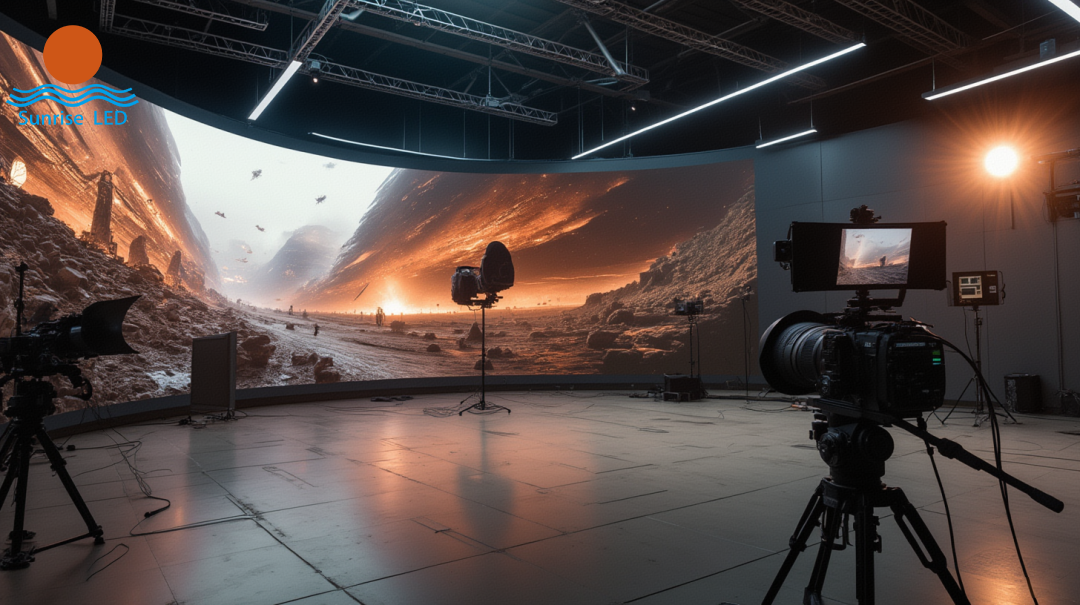
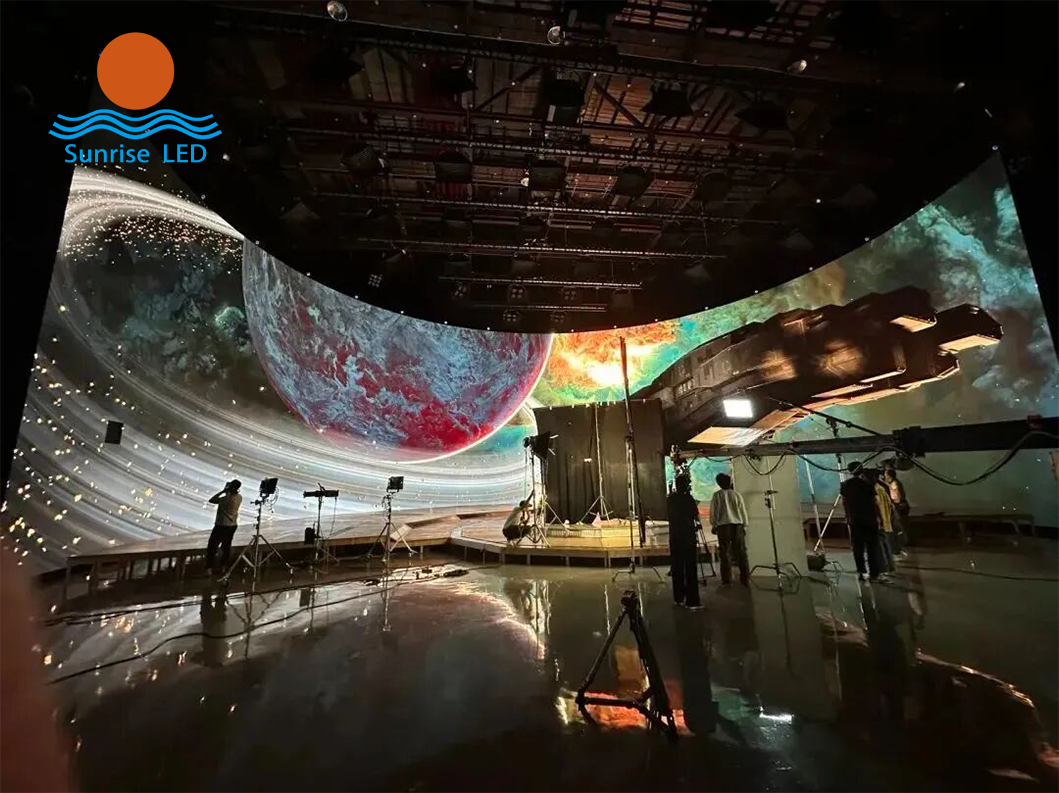
  • When the desolate alien deserts in The Mandalorian were not built as physical sets but rendered in real time on giant LED screens above the actors, the film and television industry witnessed a disruptive revolution. In recent years, XR (Extended Reality) and VP (Virtual Production) technologies have quickly gained popularity, spreading from Hollywood blockbusters to variety shows, live broadcasts, commercial shoots, and even virtual studios. Behind this boom, LED displays are no longer simple backdrops, but the core key to redefining the magic of light and shadow.
  • From "Green Screen" to "LED Studio": A Revolution in Production Efficiency
  • Traditional film and television production relies heavily on physical set construction or post-production keying. Physical sets are time-consuming, costly, and difficult to modify; green‑screen shooting places high demands on actors’ performances, lacks real environmental feedback, and forces post-production teams to spend months on keying and light‑shadow matching.
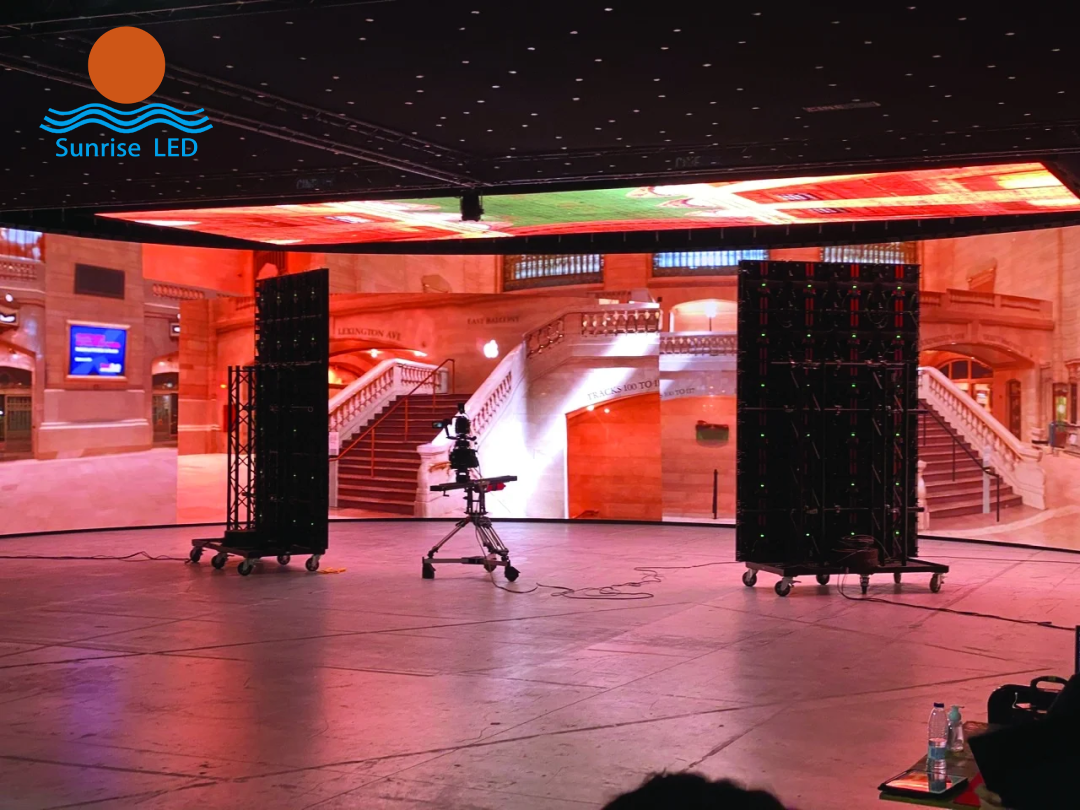
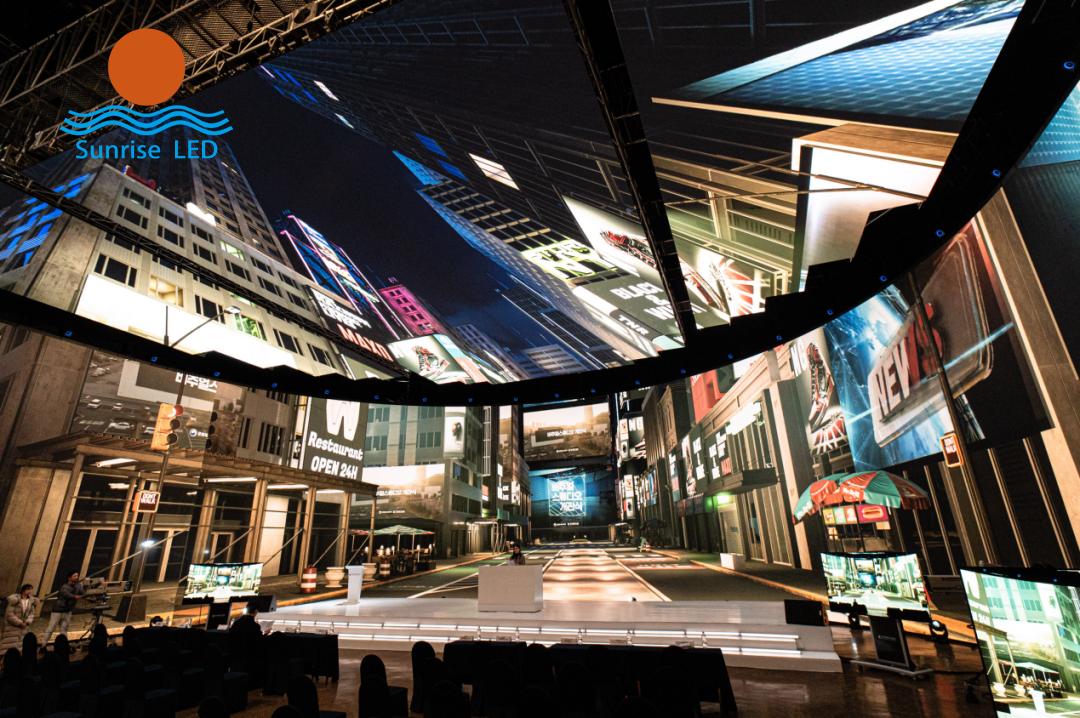
  • The core transformation of XR/VP virtual production lies in post‑production frontloading. With huge LED curved screens (usually a 270° arc screen combined with ceiling and floor screens to form an "LED Volume"), realistic virtual worlds are rendered directly on set. As proven by multiple benchmark projects worldwide, scene switching can be reduced from days to minutes, greatly improving shooting efficiency and industrialization capabilities.
  • The "Hardcore" Secrets of LED Displays: Built for Cameras
  • Why can’t ordinary LED screens be used for virtual production? The secret lies in the extremely strict image quality requirements of film and television shooting.
  • 1. No Moiré or Scan Lines
  • If a high‑speed camera and an LED screen are not synchronized in refresh rate, annoying black scan lines or moiré patterns will appear. For this reason, top virtual studios all use control systems with high refresh rates (e.g., 7680 Hz) and ShutterLock camera synchronization technology, ensuring that the image on camera remains pure and stable no matter how the camera moves.
  • 2. Realistic Color and HDR
  • To simulate real lighting, LED screens must cover a wide color gamut (e.g., DCI‑P3) and support high dynamic range (HDR). The screen itself becomes a huge "light source"; the texture of light reflected on actors and props directly determines the realism of the final image. This is the key reason LED studios avoid the "color spill" problem of green screens and allow actors to perform immersively.
  • 3. Ultra‑High Brightness and Consistent Viewing Angles
  • When shooting close‑ups or wide‑angle shots, LED screens must not suffer from color shift or brightness attenuation. The industry is adopting technologies such as flip‑chip LEDs to improve color shift at large viewing angles and ensure uniform and consistent images.
  • From VP to XR: Expanding Technological Boundaries
  • Although often mentioned together, VP and XR have subtle differences in practical applications.
  • VP generally refers to "simultaneous camera‑control shooting" using LED screens as backgrounds, emphasizing "what you shoot is what you get".
  • XR goes further: it extends virtual scenes beyond the screen via extended reality technology, and even integrates AR foreground elements to create a broader mixed‑reality space.
  • In both forms, the addition of LED floor and ceiling screens completely envelops the cast and crew in a virtual world, achieving seamless integration of virtual and real elements.
  • The Future Has Arrived: From "Luxury" to "New Infrastructure"
  • With the launch of Deqing’s world‑largest LED virtual studio (5,000 ㎡, 600 million pixels) and continuous technological breakthroughs by upstream and downstream enterprises such as Colorlight, Absen, and LG, the cost threshold of virtual production is gradually decreasing.
  • Today, top commercial shoots at Dubai’s Web3TV and large‑scale film productions at Korea’s Studio V all mark that LED virtual production has moved from the exploratory stage to industrialized large‑scale application.
  • The popularity of XR/VP virtual production is essentially humanity’s relentless pursuit of efficiency and realism in "dream‑making".
  • LED displays are no longer just display terminals; they are bridges connecting reality and virtuality, creators of light and shadow, and infrastructure for future image creation.Here, imagination is the only limit.
 

Technology | analysis of naked eye 3D display technology

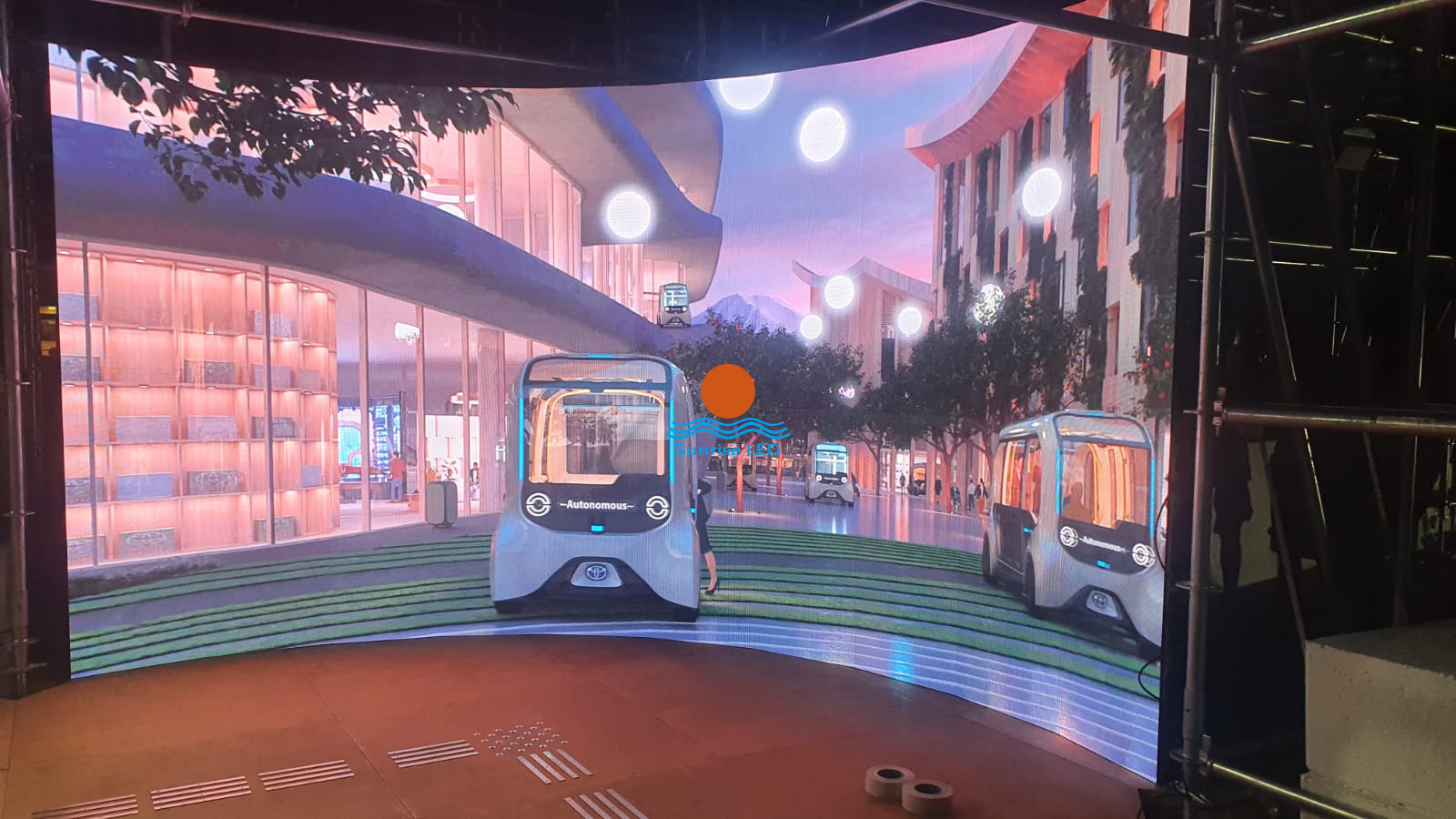
At present, the naked eye 3D large screen market is hot, and 3D technology is also known as 3D di...
Do you like ?2,735 views

Read more

Sunrise’s p2.604 curved LED display lights up under the Eiffel Tower

Sunrise’s p2.604 curved LED display lights up under the Eiffel Tower     Sunri...
Do you like ?1,739 views

Read more

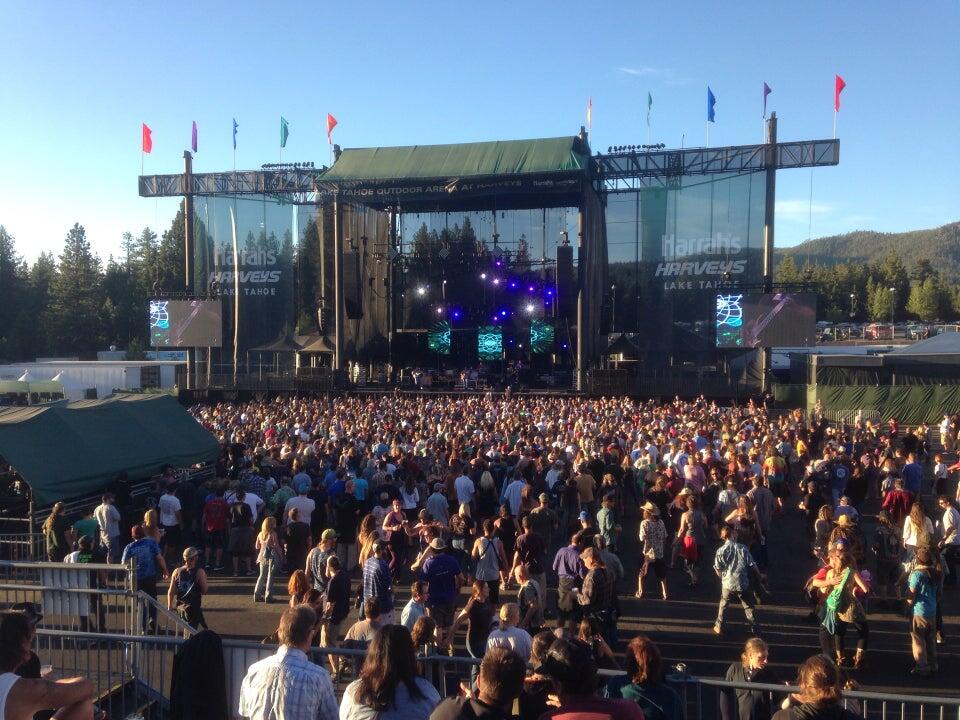
Sunrise LED Rocky Rental Series led display for concert

Concert activities are popular in the United States, and sunrise’s products have been wide...
Do you like ?2,306 views

Read more

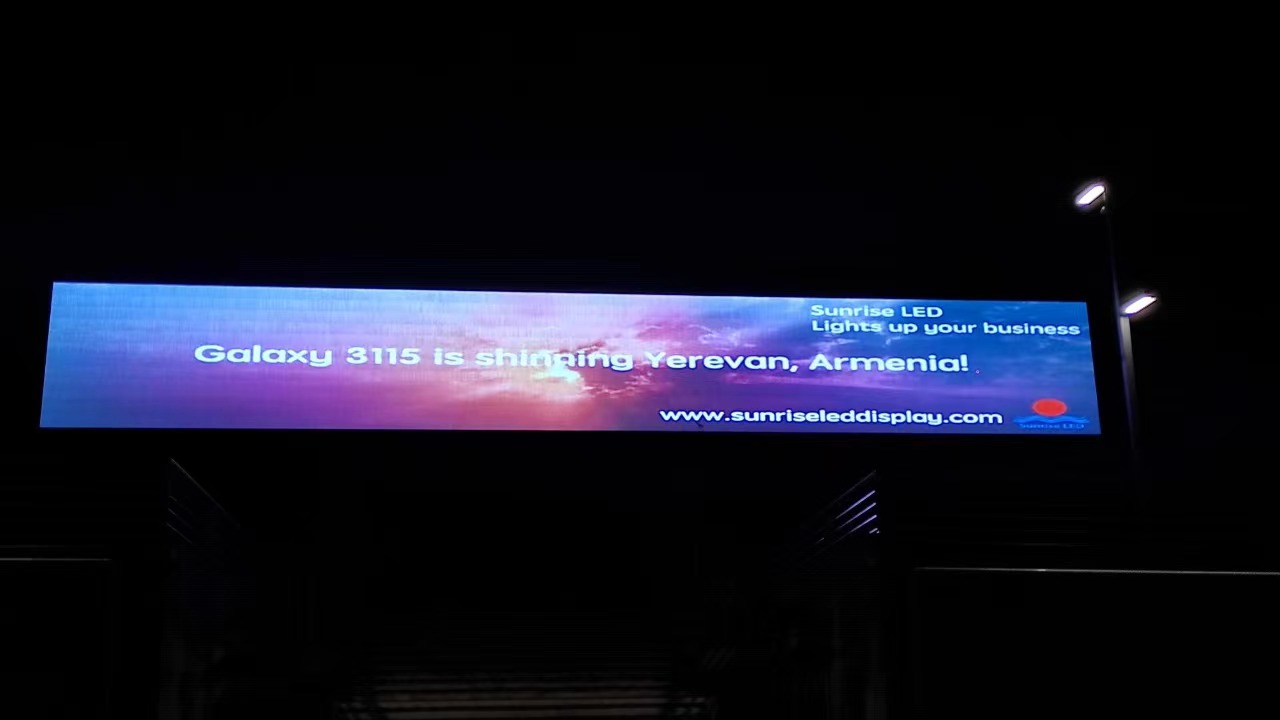
Sunrise 264 square meters Galaxy 3115 series mesh led facade in Armenia

  Sunrise 264 square meters Galaxy 3115 series mesh led facade in Armenia     Sun...
Do you like ?1,739 views

Read more

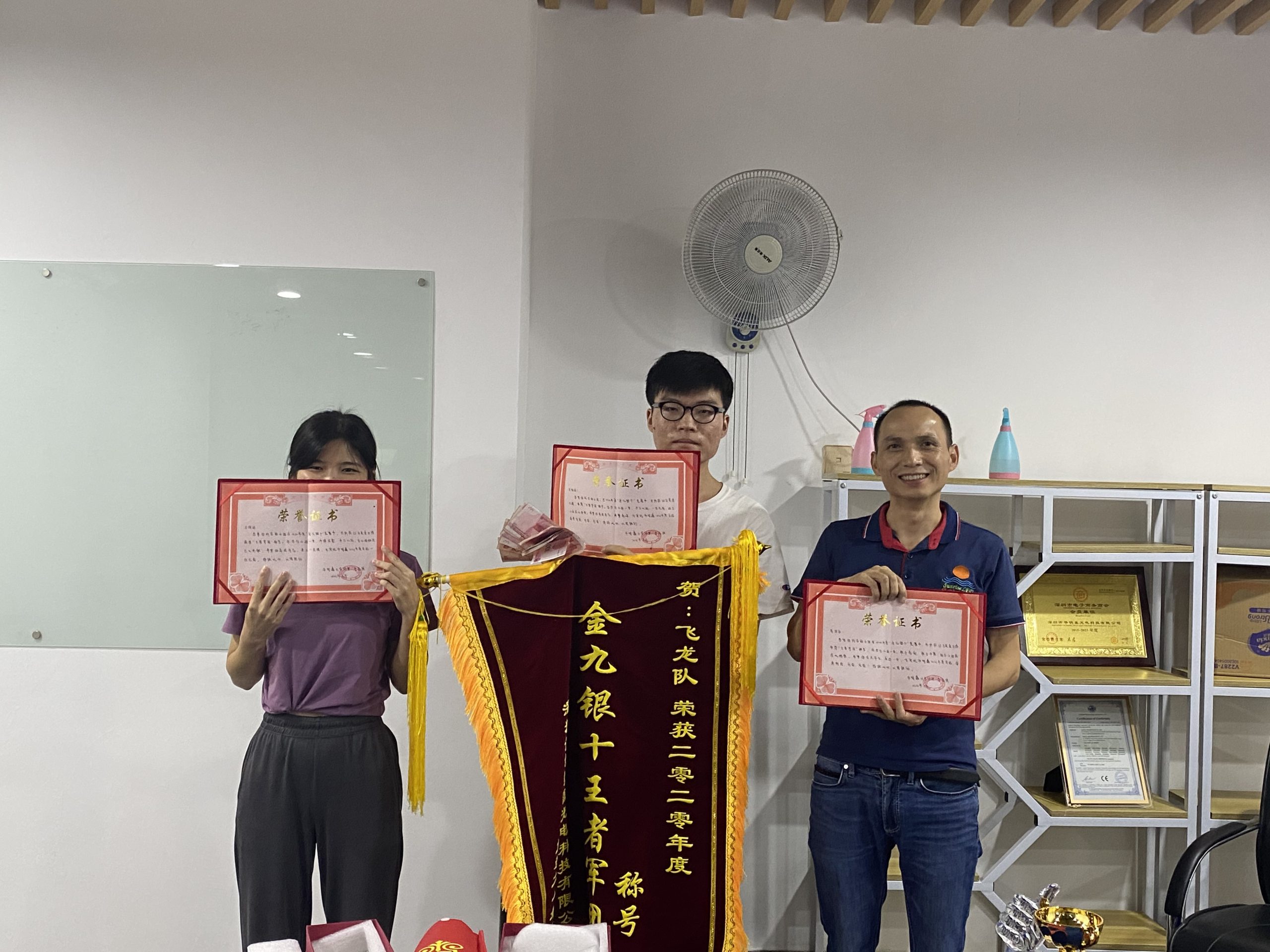
Sunrise led presents awards to excellent salesmen!

Doris, as a new salesman, won three orders in two months. It’s great.   Jack, the bu...
Do you like ?1,548 views

Read more

Our new product, led grow light, PPE reaches 2.6umol/j

640w and 800W full spectrum led grow light   It can be folded for convenient transportatio...
Do you like ?1,773 views

Read more

The latest project, Saudi Arabia LED MESH FACADE

The latest project, Saudi Arabia LED MESH FACADE. Ultra-high brightness, ultra-light LED display ...

Do you like ?2,297 views

Read more