news

Core Links Affecting the Seamless Display Effect of LED Screens

8 views admin 2026-01-08

  • The seamless display effect of LED screens is the result of the collaborative interaction of multiple links, including hardware precision, installation technology, signal processing, and software calibration. Its core contradictions focus on three key dimensions: "physical splicing gaps", "display consistency deviations", and "signal synchronization delays".
  • Hardware Design and Production Link
 
  • The precision of hardware design and production directly determines the basic conditions for the seamless display of LED screens. The core influencing factors include: Module Splicing Precision
 
  • The frame thickness (including PCB board and shell) and pin interface design of traditional LED modules can lead to physical gaps of 0.5-2mm between modules; insufficient module size tolerance and buckle positioning accuracy can cause height differences or side seam misalignment after splicing.
 
  • LED Chip Packaging and Arrangement
 
  • Inconsistent packaging heights and luminous angle deviations (e.g., ±5°) of surface-mount device (SMD) LED chips can result in "bright edges" or "dark seams" at the splicing joints; Insufficient alignment between chip spacing and chips at module splicing points can disrupt image continuity.
  • PCB Board and Power Supply Design
 
  • Unreasonable circuit layout at the edge of the PCB board can cause signal transmission attenuation at the splicing joints; uneven power supply can lead to brightness differences at the splicing points; defects in the module's heat dissipation design can result in changes in splicing gaps caused by thermal expansion and contraction. On-site Installation and Structural Construction Link
 
  • The standardization of on-site installation technology and structural construction directly affects the precision of physical splicing. The core influencing factors include:
 
  • Installation Structure Precision
 
  • Insufficient levelness (deviation ±1mm/m) and verticality (deviation ±0.5mm/m) of the steel structure/aluminum profile frame can cause the entire screen to have a "wavy" splicing effect; deformation caused by uneven frame bearing capacity (e.g., mid-span sagging of large-size screens) can widen the gaps between bright and dark modules. Standardization of Splicing Technology
 
  • Disordered module fixing sequences during manual installation (e.g., installing from the middle to both sides vs. from one side to the other) and inconsistent buckle tightening torque (e.g., torque deviation ±0.5N·m) can lead to module height differences; failure to perform dust and moisture prevention treatment at the splicing joints can cause dust accumulation over long-term use, amplifying the visual effect of gaps.
 
  • Insufficient Environmental Adaptability
   
  • For outdoor screen installation, failure to consider wind force and temperature changes (e.g., module thermal expansion and contraction caused by temperature differences of -20℃~60℃) and lack of reserved expansion joints in the frame; for indoor screens installed in vibrating environments (e.g., near shopping mall escalators), failure to adopt shockproof and buffer structures can cause module loosening and subsequent changes in gaps.
 
  • Signal Processing and Synchronization Control Link
 
  • The precision of signal processing and the stability of synchronization control determine the continuity of image display. The core influencing factors include: Signal Synchronization Delay
 
  • Time differences in signal reception between different modules during multi-module splicing (e.g., ≥1ms) can cause image tearing (e.g., "fault lines" in dynamic images); insufficient signal distribution precision of the video processor can lead to signal delays in edge modules.
 
  • Color and Brightness Consistency Deviations
 
  • Differences in luminous efficiency, color temperature (e.g., deviation ±300K), and grayscale levels (e.g., uneven brightness at low grayscales) of LED chips in different modules can result in "color blocks" or "bright bands" at the splicing joints; failure to perform unified calibration of the entire screen or failure to optimize calibration parameters for splicing joints can amplify these deviations.
 
  • Control Software Compatibility
 
  • Mismatched communication protocols between the control card and modules (e.g., DVI vs. HDMI 2.1) can cause unstable signal transmission; defects in the software splicing algorithm (e.g., unreasonable edge blending parameter settings) can lead to image stretching and deformation at the splicing joints.
 
  • Post-maintenance and Environmental Adaptation Link
 
  • The quality of post-maintenance and the degree of environmental adaptation determine the durability of the seamless effect. The core influencing factors include: Inconsistent LED Chip Attenuation
 
  • After long-term use (e.g., 10,000 hours), differences in the attenuation rate of LED chips in different modules (e.g., attenuation deviation ≥10%) can expand the brightness difference at the splicing joints; long-term exposure of outdoor screens to ultraviolet radiation and rainwater can accelerate the aging of the chip packaging adhesive, worsening color deviations.
 
  • Module and Frame Wear
 
  • Module interface loosening caused by frequent on-off cycles and current impacts; micro-deformation of the frame due to long-term bearing capacity; aging of the sealant and dust accumulation at the splicing joints can amplify the visual effect of physical gaps. Changes in Usage Environment
 
  • Sudden changes in ambient light intensity (e.g., sudden strong light turned on near indoor screens) can make "bright edges" at the splicing joints more obvious; drastic temperature changes (e.g., diurnal temperature difference ≥30℃ for outdoor screens) can cause module thermal expansion and contraction, damaging splicing precision.
 
  • Summary
 
  • The realization of the seamless display effect of LED screens depends on three core dimensions: "physical splicing precision", "signal synchronization quality", and "display consistency", which are comprehensively affected by the entire process including hardware production, on-site installation, signal control, and post-maintenance. Among these, the precision of hardware production is the basic premise, the standardization of on-site installation is the key to physical seamlessness, the synchronization of signal control is the core of image seamlessness, and the timeliness of post-maintenance is the guarantee for the long-term maintenance of the seamless effect. In practical applications, it is necessary to focus on the core influencing factors of each link and address deviations in a targeted manner to ensure the seamless display effect.
         

Technology | analysis of naked eye 3D display technology

At present, the naked eye 3D large screen market is hot, and 3D technology is also known as 3D di...
Do you like ?2,592 views

Read more

Sunrise’s p2.604 curved LED display lights up under the Eiffel Tower

Sunrise’s p2.604 curved LED display lights up under the Eiffel Tower     Sunri...

Do you like ?1,645 views

Read more

Sunrise LED Rocky Rental Series led display for concert

Concert activities are popular in the United States, and sunrise’s products have been wide...

Do you like ?2,205 views

Read more

Sunrise 264 square meters Galaxy 3115 series mesh led facade in Armenia

  Sunrise 264 square meters Galaxy 3115 series mesh led facade in Armenia     Sun...

Do you like ?1,656 views

Read more

Sunrise led presents awards to excellent salesmen!

Doris, as a new salesman, won three orders in two months. It’s great.   Jack, the bu...
Do you like ?1,472 views

Read more

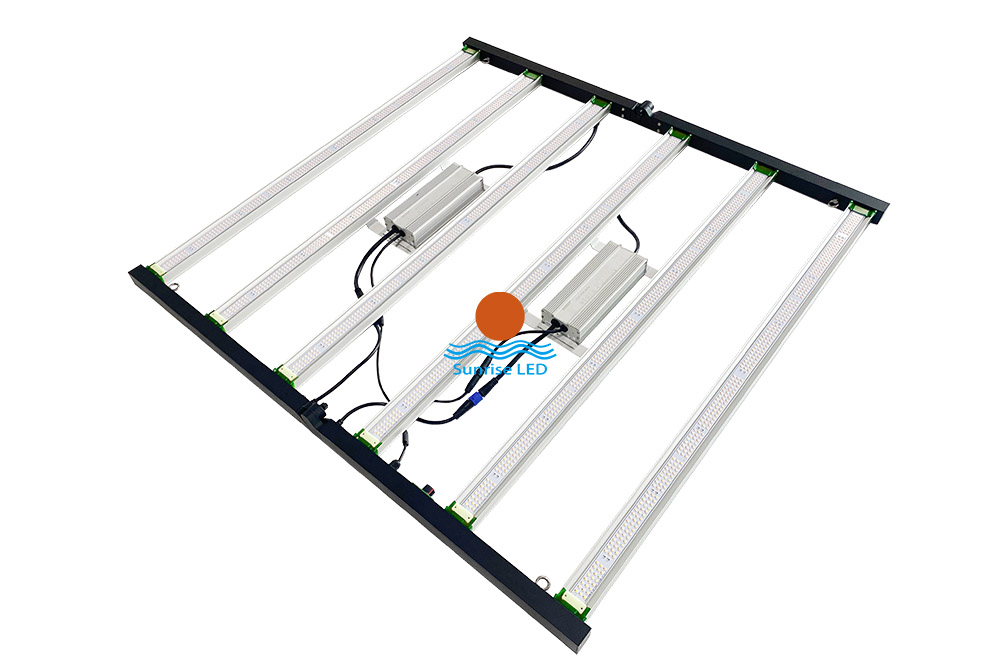
Our new product, led grow light, PPE reaches 2.6umol/j

640w and 800W full spectrum led grow light   It can be folded for convenient transportatio...

Do you like ?1,688 views

Read more

The latest project, Saudi Arabia LED MESH FACADE

The latest project, Saudi Arabia LED MESH FACADE. Ultra-high brightness, ultra-light LED display ...

Do you like ?2,190 views

Read more