10 views admin 2026-03-25
In the LED display industry, COB (Chip On Board) packaging and SMD (Surface Mounted Device) are the two mainstream technology routes. With distinct packaging logics, they differ dramatically in display effect, reliability, cost and application scenarios, which profoundly influences the selection decisions for various display projects.
I. Core Processes: Fundamental Differences Between the Two Technology Routes
### 1.1 SMD Surface Mount: Mature Mass-produced Point Light Source Packaging Logic
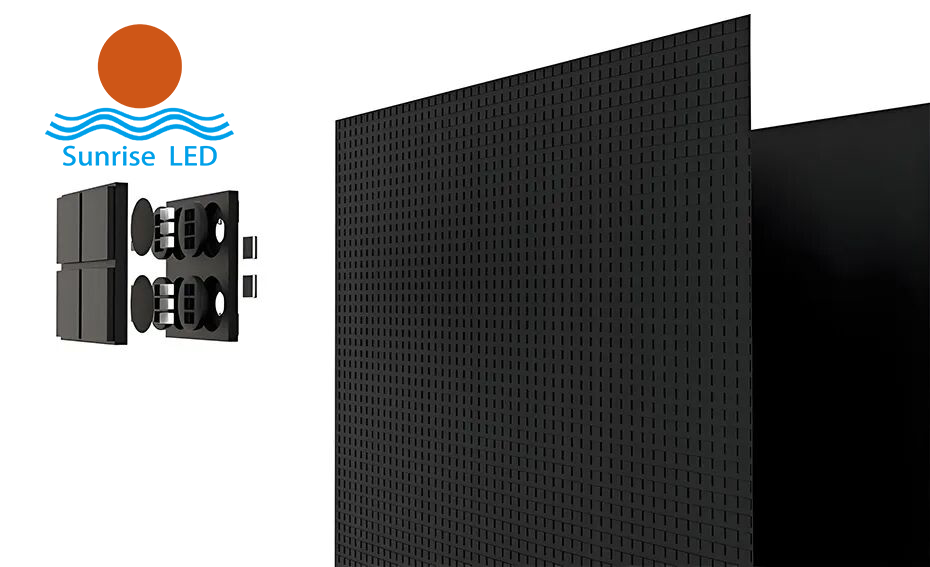
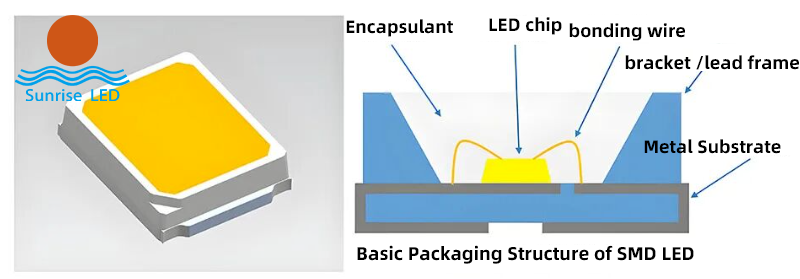
As a mature solution deeply rooted in the market for years, the core logic of SMD surface mount technology is to first package LED chips into independent lamp beads, then mount the beads onto a PCB board via SMT process to form a discrete point light source array.
Featuring a mature production process and a complete supply chain, it enables large-scale mass production. Common lamp bead models such as 2020 and 3535 are widely used in various regular-pitch displays.
 1.2 COB Packaging: An Innovative Path for Integrated Surface Light Source
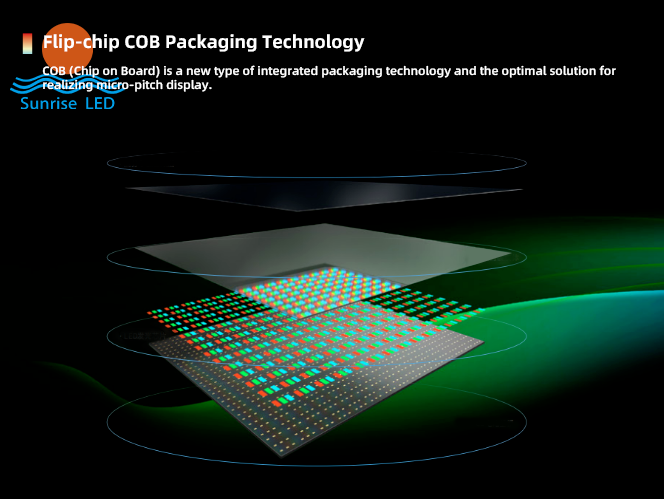
COB packaging breaks the traditional model of "packaging beads first then mounting". It directly mounts and bonds bare LED chips onto a PCB board, followed by encapsulation and protection with organic adhesive to form an integrated surface light source.
Its core process includes eight steps such as board cleaning, die bonding, drying, wire bonding and adhesive encapsulation, which imposes strict requirements on chip positioning accuracy and packaging technology, especially relying on mass transfer technology to meet the demand for smaller-pitch displays.
This process omits the separate packaging of lamp beads, allowing direct connection between chips and the PCB board, fundamentally optimizing heat dissipation and protection performance.
II. Key Performance: A Head-to-head Competition of Core Indicators
2.1 Display Effect: Gaps in Delicacy and Viewing Angle
In terms of display effect, as a point light source, SMD surface mount tends to show a grainy appearance when viewed at close range, with a viewing angle of approximately 110°, color shift easily occurring in side viewing, and relatively limited contrast ratio.
In contrast, the surface light source characteristic of COB packaging delivers a finer and more uniform picture with no obvious graininess, a contrast ratio of over 20,000:1, and a widened viewing angle of 140–170°. There is no picture degradation in side viewing, bringing a visual experience closer to that of LCD screens.
 2.2 Reliability: A Contest of Protection and Service Life
In terms of reliability, SMD lamp beads are exposed with a low protection level, making them prone to dust accumulation, water ingress and collision damage. Problems such as dead lamps, bead detachment and brightness attenuation are common in long-term use, with a relatively high lamp failure rate.
For COB packaging, chips are fully encapsulated by organic adhesive, achieving a front protection level of above IP54, which effectively resists dust, moisture and physical impacts. Its lamp failure rate is less than one-tenth that of SMD.
Moreover, with chips directly attached to the PCB board, the heat dissipation path is shortened, power consumption is 15%–20% lower than SMD, and the service life can reach 8–10 years, significantly outperforming SMD.
2.3 Cost and Maintenance: A Trade-off Between Cost Performance and Convenience
In terms of cost and maintenance, SMD benefits from mature technology and a complete supply chain, resulting in much lower procurement and production costs than COB. In addition, lamp beads can be individually disassembled and replaced, allowing on-site maintenance with a short cycle and low cost.
COB packaging involves complex processes and high mass-production difficulty, leading to an overall cost 30%–50% higher than SMD. Adopting an integrated packaging design, it does not support individual lamp bead replacement; damaged modules must be returned to the factory for full replacement, resulting in a long maintenance cycle and high cost.
 III. Application Scenarios: Differentiated Choices for Diverse Needs
The divergence in application scenarios stems from their respective performance and cost characteristics.
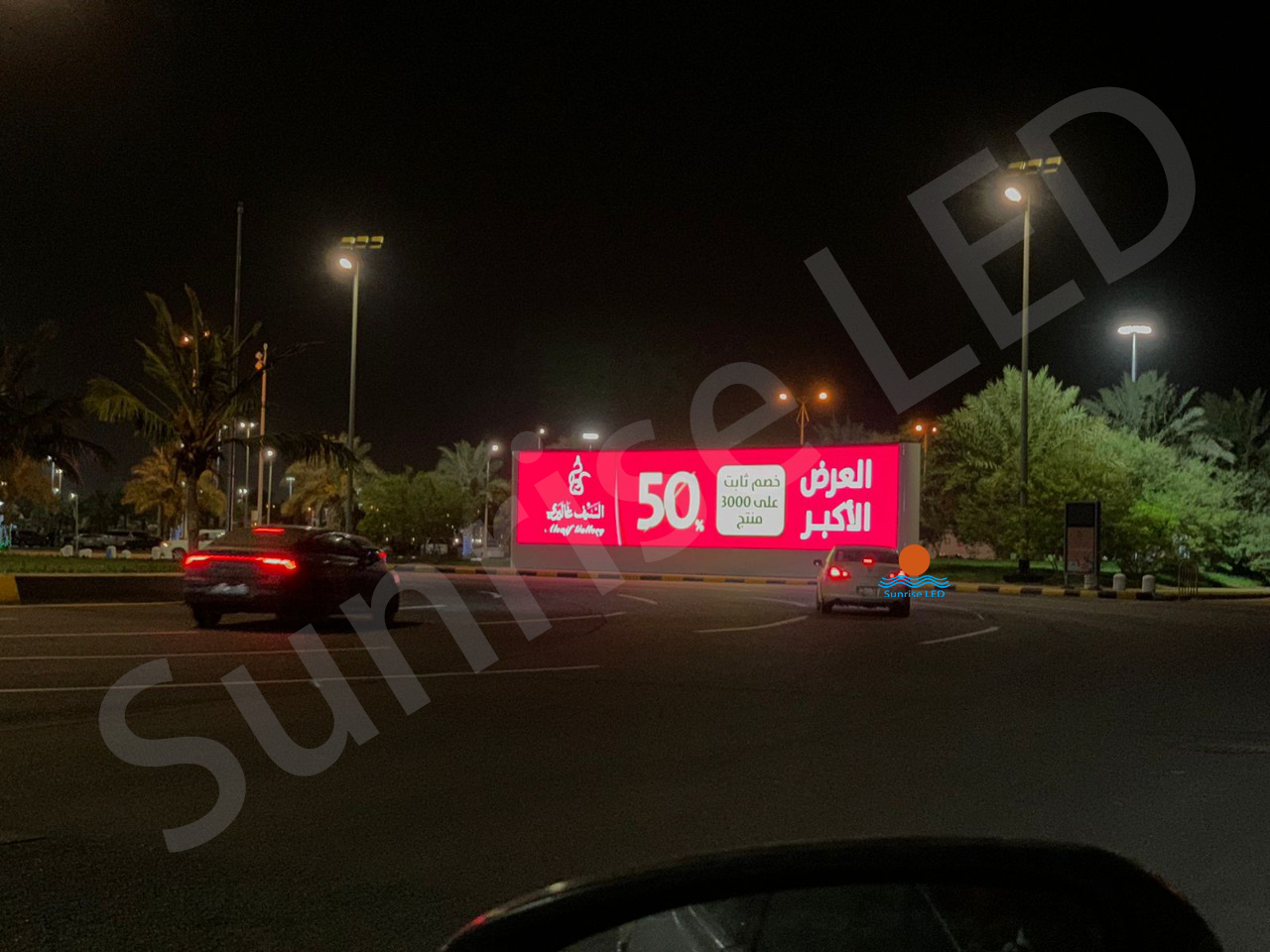
Boasting high cost performance and wide scenario adaptability, SMD surface mount is widely used in outdoor advertising screens, square large screens, conventional conference rooms, rental screens and other scenarios, especially suitable for medium-to-large pitch displays and budget-limited projects.
With the advantages of ultra-high-definition display, strong protection and high stability, COB packaging targets high-end scenarios such as command centers, monitoring rooms, high-end exhibition halls and science and technology museums, and is particularly ideal for micro-pitch displays below P1.25.
IV. Development Trends: Complementary Coexistence and Respective Upgrading
From the perspective of development trends, SMD technology will remain mainstream in general scenarios. Supported by intelligent manufacturing upgrades, its mounting accuracy and reliability will continue to improve, while evolving toward green and energy-saving directions.
With breakthroughs in mass transfer technology and expanded mass production scale, COB packaging will see a gradual cost reduction and increasing penetration in micro-pitch and high-end display fields.
The two technologies are not in a substitute relationship but coexist complementarily, jointly meeting display demands of different scenarios.
Conclusion
SMD surface mount is the **cost-effective choice**, suitable for projects with limited budgets, demand for convenient maintenance and conventional scenario requirements.
COB packaging is the **choice for high-end experience**, ideal for high-end projects pursuing ultimate picture quality, strong protection and long service life.
For optimal matching between technology and demand, selection should be made comprehensively based on project budget, application scenarios and display requirements.